

How a Diesel Engine Works – Explained Simply
If you have ever stood next to a truck loading goods, an excavator digging foundations, or a generator powering a clinic during a blackout, you have seen the power of a diesel engine at work. For apprentice mechanics, understanding how a diesel engine works is one of the most important foundations of your career.
This guide explains diesel engine basics in simple English, using real workshop examples. No heavy theory. Just practical knowledge you can use on the job.
What Is a Diesel Engine?
A diesel engine is a type of internal combustion engine. This means it creates power by burning fuel inside the engine itself.
What makes a diesel engine different from a petrol engine is how the fuel is ignited.
A petrol engine uses a spark plug to ignite the fuel.
A diesel engine does not use spark plugs.
Instead, a diesel engine uses compression ignition.
👉 Air is squeezed so hard that it becomes very hot.
👉 Diesel fuel is then injected into this hot air.
👉 The fuel ignites on its own and creates power.
This simple idea is the heart of how a diesel engine works.
Why Diesel Engines Are Used in Heavy Equipment
Diesel engines are the first choice for heavy equipment such as trucks, loaders, excavators, graders, and generators. There are good reasons for this.
1. High Torque at Low Speed
Heavy machines do not need speed. They need pulling power. Diesel engines produce high torque at low engine speed, perfect for lifting, pushing, and hauling heavy loads.
2. Strong and Durable Design
Diesel engines are built with stronger blocks, pistons, and crankshafts. This allows them to handle high compression and work long hours without failure.
3. Fuel Efficiency
Diesel engines use less fuel than petrol engines for the same work. This matters in African conditions where fuel is expensive or far from supply points.
4. Reliability in Tough Conditions
Dusty sites, high heat, poor roads, and long operating hours are common across Africa. A diesel engine for heavy equipment is designed to survive these conditions.
Basic Parts of a Diesel Engine
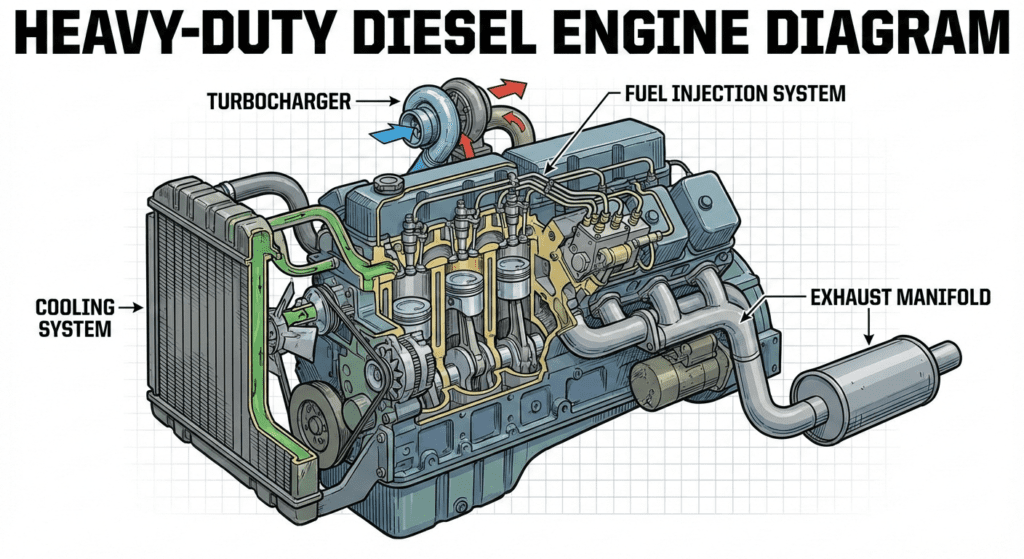
Before learning the cycle, you must know the main components.
• Cylinder Block – The main body of the engine
• Piston – Moves up and down inside the cylinder
• Connecting Rod – Links the piston to the crankshaft
• Crankshaft – Converts up-and-down movement into rotation
• Cylinder Head – Houses valves and injectors
• Fuel Injector – Sprays fuel into the cylinder
• Intake Valve – Lets air into the cylinder
• Exhaust Valve – Lets exhaust gases out
• Turbocharger – Forces more air into the engine for more power
In the workshop, these parts must work together perfectly.
How the Four-Stroke Diesel Engine Works
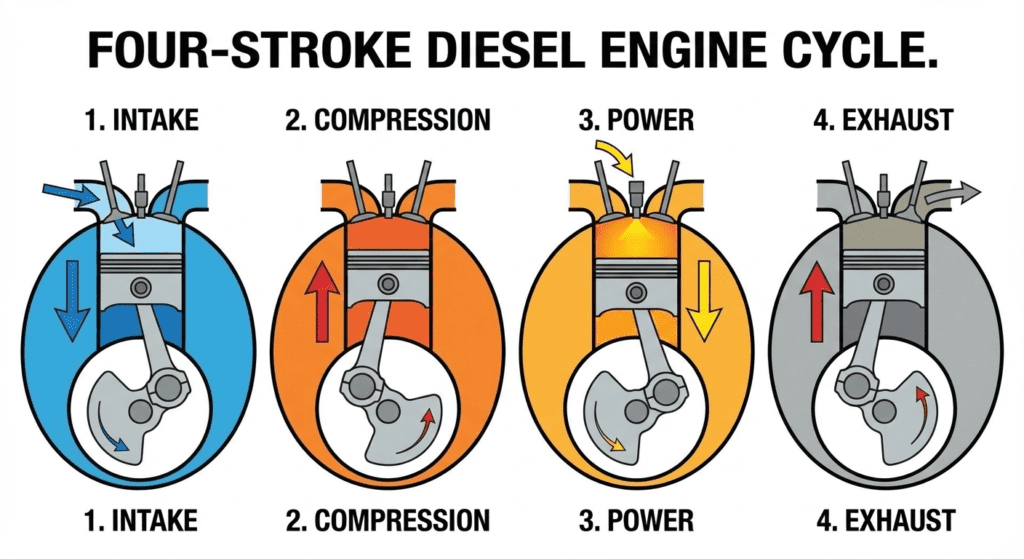
Most diesel engines operate on the four stroke diesel engine cycle. Each cycle has four movements of the piston.
1. Intake Stroke
The piston moves down.
The intake valve opens.
Only clean air enters the cylinder.
No fuel is added at this stage.
Workshop example:
When an air filter is blocked with dust, less air enters. This causes black smoke and power loss.
2. Compression Stroke
The intake valve closes.
The piston moves up.
The air is squeezed tightly.
This compression creates very high heat. Temperatures can exceed 500°C.
Workshop tip:
Worn piston rings or leaking valves reduce compression, making starting difficult.
3. Power (Injection) Stroke
Just before the piston reaches the top, the injector sprays diesel fuel into the hot air.
There is no spark.
The fuel ignites instantly due to heat and pressure.
This explosion pushes the piston down with force and creates power.
Workshop example:
Faulty injectors cause knocking, white smoke, or poor fuel economy.
4. Exhaust Stroke
The exhaust valve opens.
The piston moves up again.
Burnt gases are pushed out of the cylinder.
The cycle then repeats thousands of times per minute.
The Role of Air, Fuel, and Compression
A diesel engine needs three things to run properly:
Air
Diesel engines need lots of clean air. Turbochargers help force more air into the engine.
In dusty African sites, air filters must be cleaned or replaced often.
Fuel
Diesel fuel must be clean and free from water.
Water in fuel causes:
• Rust in injectors
• Injector seizure
• Engine misfiring
Always drain the water separator during servicing.
Compression
High compression is the key to diesel ignition.
Low compression means:
• Hard starting
• White smoke
• Loss of power
Compression problems usually point to worn rings, valves, or cylinder liners.
Real-World Examples from the Field
Trucks
Long-haul trucks rely on diesel engines for pulling heavy loads across borders. Fuel efficiency and durability are critical.
Excavators
Excavators need instant torque when lifting or digging. Diesel engines deliver steady power at low RPM.
Generators
Hospitals, mines, and farms depend on diesel generators. They must run for long hours without overheating or failing.
In all cases, proper maintenance keeps the engine reliable.
Safety Notes for Apprentice Technicians
Working around diesel engines can be dangerous if safety is ignored.
• Always lock out the engine before working
• Never loosen fuel lines on a running engine
• High-pressure diesel fuel can penetrate skin
• Hot exhaust components can cause severe burns
• Wear eye protection when bleeding fuel systems
Safety habits learned early will protect you for life.
Common Beginner Mistakes to Avoid
• Using dirty fuel
• Skipping oil changes
• Ignoring warning lights
• Not bleeding air from fuel systems
• Running engines with blocked air filters
Small mistakes lead to big repair bills.
Summary: Master the Basics First
Understanding how a diesel engine works is the foundation of becoming a skilled technician. Every advanced system — fuel injection, electronics, emissions, and diagnostics — builds on these basics.
Learn the four strokes.
Respect air, fuel, and compression.
Work clean.
Work safe.
Encouragement for Apprentices
Every expert diesel technician started exactly where you are today. Ask questions, observe experienced mechanics, and never rush your learning.
Follow ModernTradeSkills for practical diesel training, real workshop lessons, and guidance for building a strong technical career.
👉 The basics done well will carry you far.
Diesel engines operate on the principle of compression ignition, where air is compressed to a high temperature before fuel is injected. Understanding how diesel engines work involves grasping key concepts such as the four-stroke cycle, fuel injection timing, and the role of turbocharging in enhancing efficiency. Attention to detail in these areas not only prevents operational errors but also fosters a deeper appreciation for advanced technologies in diesel mechanics. As you build your expertise, remember that continuous learning and practical experience are vital for success in this dynamic field.