

Summary
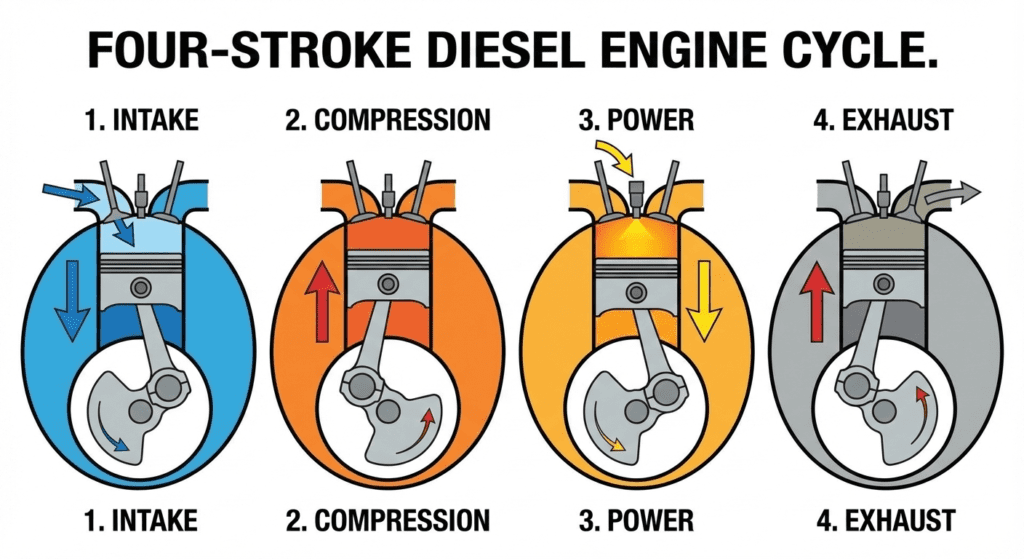
If you want to understand how a diesel engine works, you must first understand the four stroke diesel engine cycle. Every diesel engine you will work on — whether it is in a truck, excavator, generator, or loader — follows this basic cycle.
As an apprentice, once you master these four strokes, fault finding and diagnostics become much easier. This lesson explains the cycle step by step, using simple language and real workshop examples.
What Is the Four-Stroke Diesel Engine Cycle?
The four-stroke cycle describes the four movements of the piston inside the engine cylinder that produce power.
Each movement is called a stroke.
The four strokes are:
The four stroke diesel engine is essential for various applications and understanding its mechanics can greatly enhance your skills.
- Intake
- Compression
- Power
- Exhaust
One complete cycle takes two full turns of the crankshaft.
Why Diesel Engines Use the Four-Stroke Cycle
Diesel engines use the four-stroke cycle because it allows:
- Better fuel efficiency
- Strong torque at low speed
- Controlled combustion
- Longer engine life
This is why diesel engines are preferred for heavy equipment and commercial vehicles that work long hours in tough conditions.
Stroke 1: Intake Stroke – Air Comes In
During the intake stroke:
- The piston moves down
- The intake valve opens
- Fresh air is drawn into the cylinder
⚠️ Important:
Only air enters the cylinder — no fuel yet.
Workshop Example
On dusty African construction sites, air filters block quickly. A blocked air filter reduces air intake, causing black smoke and loss of power.
👉 Always inspect air filters during service.
Stroke 2: Compression Stroke – Air Is Squeezed
During the compression stroke:
- Both valves close
- The piston moves up
- The air is squeezed tightly
This compression creates very high heat.
The air temperature becomes hot enough to ignite diesel fuel.
Apprentice Tip
Low compression can cause:
- Hard starting
- White smoke
- Low power
Common causes include worn piston rings, damaged valves, or head gasket leaks.
Stroke 3: Power Stroke – Fuel Ignites
This is where the engine produces power.
During the power stroke:
- The piston reaches the top
- The fuel injector sprays diesel into the hot air
- The fuel ignites automatically (compression ignition)
- The explosion forces the piston down
There is no spark plug in a diesel engine.
Workshop Example
A faulty injector can cause:
- Knocking sounds
- Poor fuel economy
- Excessive smoke
Clean fuel and proper injector maintenance are critical.
Stroke 4: Exhaust Stroke – Waste Gases Leave
During the exhaust stroke:
- The exhaust valve opens
- The piston moves up
- Burnt gases are pushed out of the cylinder
This clears the cylinder so the next intake stroke can begin.
Practical Note
Blocked exhaust systems or faulty turbochargers cause high exhaust temperatures and power loss.
The Role of Air, Fuel, and Compression
A diesel engine cannot run unless these three work together:
Air
Supplied through the air filter and turbocharger.
Dirty air damages pistons and cylinders.
Fuel
Must be clean and free of water.
Water destroys injectors and fuel pumps.
Compression
Creates the heat needed for ignition.
Low compression = poor engine performance.
Four-Stroke Cycle in Real Machines
Trucks
The four-stroke cycle allows steady pulling power when hauling heavy loads over long distances.
Excavators
Provides smooth, controlled power for lifting and digging.
Generators
Ensures reliable power during long running hours in hospitals, mines, and farms.
Common Apprentice Mistakes
• Mixing intake and exhaust strokes
• Thinking fuel enters during intake
• Ignoring air filter maintenance
• Running engines with water in fuel
• Working near running engines without safety checks
Learning the cycle correctly helps avoid costly mistakes.
Safety Notes for Apprentices
• Never work on a running engine
• Lock out and tag out before repairs
• Beware of hot exhaust components
• High-pressure fuel can penetrate skin
• Always wear eye protection
Safety is part of professionalism.
Summary: Learn the Cycle, Master the Engine
The four-stroke diesel engine cycle is the foundation of diesel engine operation. Every repair, diagnosis, and rebuild depends on understanding these four simple steps.
Once you master:
- Intake
- Compression
- Power
- Exhaust
You will understand why engines fail, not just how to fix them.
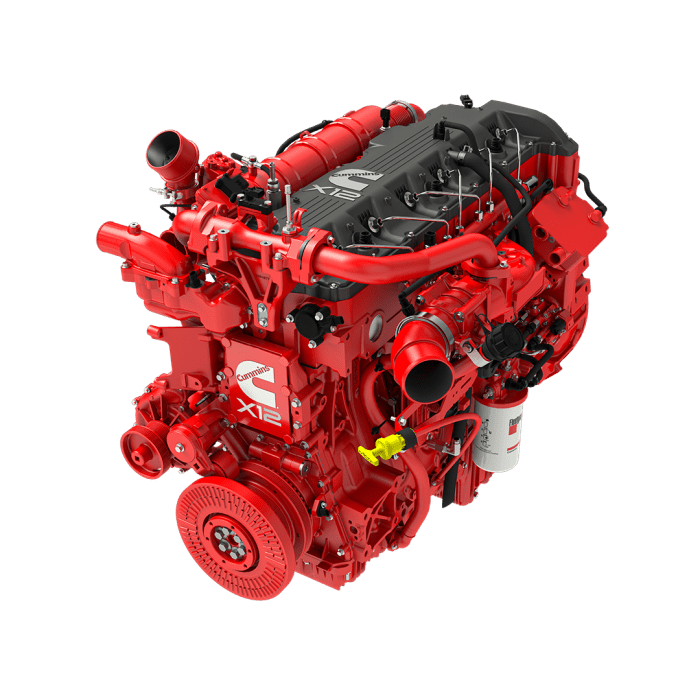
Cummins X12 Engine
https://www.cummins.com/engines/x12
Encouragement for Apprentices
Every skilled diesel technician once struggled to understand these basics. Take your time, ask questions, and practice linking theory to real machines.
👉 Follow ModernTradeSkills for practical diesel training, workshop lessons, and career guidance for tradesmen.