

If you want to understand diesel engines properly, you must understand compression. Many engine problems—hard starting, white smoke, low power—can be traced back to one issue: poor compression.
In this lesson, we explain diesel engine compression in simple terms, using real workshop examples that apprentice technicians see every day.
What Compression Means in a Diesel Engine
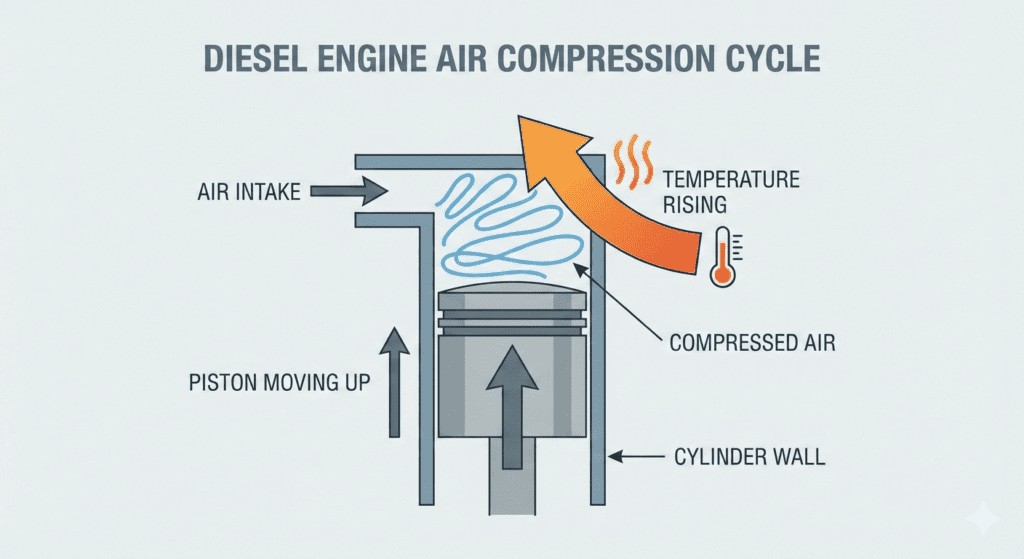
Compression simply means squeezing air into a smaller space.
Inside a diesel engine:
- The piston moves upward
- The air inside the cylinder is squeezed tightly
- As the air is compressed, it becomes very hot
This heat is the key to how diesel engines work.
Why Diesel Engines Do Not Use Spark Plugs
Petrol engines use spark plugs to ignite fuel.
Diesel engines work differently.
A diesel engine:
- Does not need a spark
- Uses compression ignition
This means the air is compressed until it becomes hot enough to ignite diesel fuel on its own.
That is why spark plugs are not used in diesel engines.
How Compression Ignition Works
Here is the simple explanation:
- Air enters the cylinder during the intake stroke
- The piston compresses the air during the compression stroke
- The air temperature rises sharply
- Diesel fuel is injected into the hot air
- The fuel ignites instantly and creates power
This process is called compression ignition.
Without enough compression, the fuel will not ignite properly.
Why High Compression Is Important
Diesel engines use much higher compression ratios than petrol engines.
High compression provides:
- Reliable starting
- Strong engine power
- Efficient fuel burning
- Low exhaust smoke
This is why diesel engines are ideal for heavy equipment and commercial vehicles.
What Happens When Compression Is Too Low
Low compression causes many common diesel engine problems.
Symptoms of Low Compression
• Hard starting, especially when cold
• White smoke from the exhaust
• Rough idle
• Low power
• High fuel consumption
Common Causes of Low Compression
Worn Piston Rings
Allow air to leak past the piston.
Leaking Valves
Valves that do not seal properly lose compression.
Blown Head Gasket
Allows compression to escape between cylinders.
Worn Cylinder Liners
Reduces the engine’s ability to seal air.
Real Workshop Examples
Trucks
A truck that struggles to start in the morning often has worn rings or valves. Operators complain that the engine “cranks but won’t fire.”
Excavators
Low compression causes slow response when lifting or digging. Power drops under load.
Generators
Generators with low compression produce unstable power and excessive smoke, especially under load.
Compression in African Working Conditions
African operating environments place extra stress on diesel engines.
Heat
High ambient temperatures cause engines to work harder and wear faster.
Dust
Dust damages piston rings and cylinder liners if air filtration is poor.
Long Operating Hours
Machines often run for long shifts without rest, increasing wear.
Fuel Quality
Poor fuel quality causes injector and combustion problems that affect compression over time.
Good maintenance is critical.
Safety Notes for Apprentices
• Never remove injectors or glow plugs on a hot engine
• Always lock out and tag out before compression testing
• High-pressure fuel systems are dangerous
• Use correct tools for compression tests
• Wear eye and hand protection
Safety must always come first.
Summary: Compression Is the Heart of a Diesel Engine
High compression is what makes diesel engines reliable, powerful, and efficient.
If compression is good:
- The engine starts easily
- Power is strong
- Fuel burns cleanly
If compression is poor:
- Problems follow quickly
Understanding compression helps you diagnose engines accurately, not by guessing.
Encouragement for Apprentices
Every skilled diesel technician learns this lesson early: never ignore compression. Take time to understand it, test it correctly, and relate it to real symptoms.
👉 Follow ModernTradeSkills for practical diesel training, real workshop lessons, and career guidance for modern tradesmen.