

Why Diesel Engines Preventive Maintenance Matters
Most diesel engine failures do not happen suddenly.
They happen because:
- Small problems were ignored
- Services were delayed
- Filters were stretched “one more shift”
- Warning signs were missed
Preventive maintenance is not about fixing broken engines.
It is about keeping good engines healthy.
In African working conditions — dust, heat, long hours, poor fuel quality — maintenance is everything.
What Is Preventive Maintenance?
Preventive maintenance means:
- Servicing on time
- Inspecting before failure
- Replacing parts before they cause damage
It is cheaper to change a filter than to rebuild an engine.
1. Clean Air: The Engine’s First Line of Defense
Why Air Matters
Diesel engines use huge volumes of air.
Dirty air means:
- Faster engine wear
- Blue smoke
- Loss of compression
- Reduced engine life
Practical Workshop Advice
- Check air filters daily in dusty areas
- Never blow filters with high-pressure air from close range
- Inspect intake hoses for cracks and loose clamps
👉 A leaking intake hose can destroy an engine quietly.
2. Fuel Quality and Filtration
Why Fuel Is Critical
Diesel fuel lubricates:
- Injectors
- High-pressure pumps
Dirty or watery fuel causes:
- Injector damage
- Hard starting
- Power loss
- Expensive failures
Preventive Actions
- Drain water separators regularly
- Replace fuel filters on schedule
- Never reuse old fuel filters
In remote areas, fuel cleanliness is often your biggest enemy.
3. Engine Oil: More Than Just Lubrication
What Oil Really Does
Engine oil:
- Lubricates moving parts
- Cools components
- Carries soot away
- Protects against corrosion
Diesel engines produce soot, especially under heavy load.
Apprentice Rule
If oil changes are delayed:
- Soot becomes abrasive
- Bearings wear faster
- Turbochargers fail early
👉 Oil is cheaper than engines.
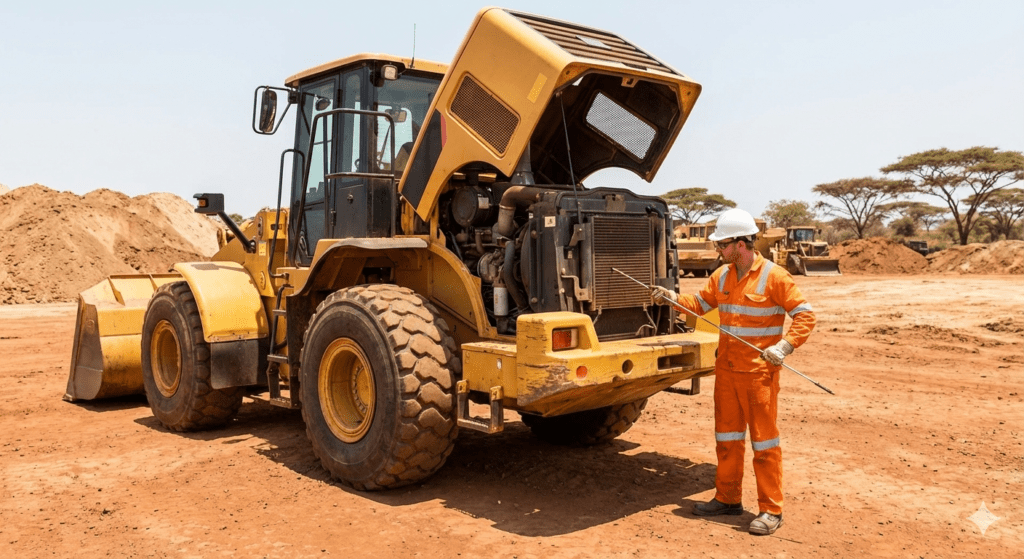
4. Cooling System Maintenance
Why Cooling Is Critical in Hot Climates
Overheating kills diesel engines quickly.
Common causes:
- Low coolant
- Blocked radiators
- Failed thermostats
- Poor-quality coolant
Workshop Checks
- Inspect coolant level daily
- Clean radiators regularly
- Never mix coolant types
- Check hoses for swelling or leaks
Never remove a radiator cap on a hot engine.
5. Belts, Hoses, and Mounts
These parts are often ignored because they are “small”.
But when they fail:
- Engines overheat
- Alternators stop charging
- Air compressors fail
- Excessive vibration damages components
Preventive Checks
- Look for cracks in belts
- Check hose clamps
- Inspect engine mounts for wear
Vibration is not normal — it is a warning.
6. Listening to the Engine
Good technicians listen.
Unusual:
- Knocking
- Whining
- Hissing
- Vibrations
These sounds are early warnings.
Apprentices should develop the habit of:
- Running engines after service
- Observing changes
- Reporting abnormal behavior immediately
Safety Notes for Apprentices
- Always isolate before inspections
- Wear PPE at all times
- Keep hands away from moving parts
- Never shortcut procedures to save time
Shortcuts cost money — and sometimes lives.
Preventive Maintenance Builds Careers
Technicians who practice good maintenance:
- Break fewer machines
- Gain trust from supervisors
- Get promoted faster
- Are chosen for expatriate work
Companies want technicians who prevent downtime, not cause it.
Final Summary
Preventive maintenance is:
- Discipline
- Observation
- Responsibility
It turns:
- Apprentices into technicians
- Technicians into supervisors
- Workshops into professional operations
Take pride in maintenance — it defines your reputation.
Call to Action
If you are learning diesel mechanics:
- Respect service intervals
- Keep records
- Ask why parts fail
- Never ignore small issues
Follow ModernTradeSkills for real-world diesel and heavy equipment training built from experience.
You can also learn more here.