

Diesel Engine Electrical Diagnostics – Finding Faults the Right Way
Introduction: Stop Guessing, Start Diagnosing
In the workshop, guessing is expensive.
Many engines are stripped down for mechanical repairs when the real problem is electrical. A weak battery, a bad ground, or a broken wire can shut down a perfectly good diesel engine.
As a technician, your job is not just to replace parts — it is to find the fault. That is what diagnostics is all about.
In this lesson, we’ll cover basic diesel engine electrical diagnostics using simple tools and real workshop thinking.

What Is Electrical Diagnostics?
Electrical diagnostics is the process of:
- Testing
- Measuring
- Confirming
before replacing parts.
You don’t diagnose with your eyes only. You diagnose with:
- A multimeter
- A test light
- A logical process
Why Electrical Diagnostics Matter on Modern Diesel Engines
Modern diesel engines rely heavily on electrical systems for:
- Starting
- Fuel injection
- Engine protection
- Monitoring temperatures and pressures
If the electrical system fails:
- The engine may not start
- The engine may derate (lose power)
- The engine may shut down to protect itself
This is common on trucks, excavators, loaders, generators, and drilling rigs.
The Basic Electrical Checks Every Technician Must Do
1️⃣ Battery Condition and Voltage
The battery is always your starting point.
What to Check:
- Physical condition (cracks, leaks)
- Terminal cleanliness
- Tight connections
Voltage Checks:
- Engine OFF: 12.6V (fully charged)
- Engine cranking: should not drop below 9.6V
- Engine running: 13.5–14.5V
👉 Workshop reality:
Many “no-start” problems are simply weak batteries.
2️⃣ Starter Circuit Checks
If the engine does not crank, don’t blame the starter immediately.
Check:
- Battery voltage at starter
- Starter solenoid signal
- Ground connection to engine block
Common faults:
- Loose ground strap
- Burnt solenoid contacts
- Corroded cables
3️⃣ Charging System (Alternator) Checks
A good engine will still fail if the alternator is faulty.
Check:
- Charging voltage at battery
- Belt condition and tension
- Electrical connections at alternator
Symptoms of charging problems:
- Battery warning light
- Repeated dead batteries
- Erratic electronic behavior
Understanding Grounds – The Forgotten Circuit
Electricity needs two paths:
- Power
- Ground
A bad ground causes:
- False sensor readings
- ECU communication faults
- Random shutdowns
Always Check:
- Battery ground to chassis
- Engine ground strap
- ECU ground points
👉 Instructor’s tip:
If a fault comes and goes, suspect a ground problem.
Using a Multimeter the Right Way
A multimeter is one of the most important tools in modern diesel diagnostics. You can watch this video on how to use a multimeter.
Basic Tests You Must Master:
- Voltage
- Resistance
- Continuity
Example:
If a sensor has:
- Power
- Ground
but no signal → the sensor is faulty.
If a sensor has:
- No power
→ wiring or ECU issue.
Common Electrical Faults in African Working Conditions
We must be realistic about where we work.
Typical Problems:
- Dust entering connectors
- Water intrusion during washing
- Heat damaging insulation
- Vibrations breaking wires inside insulation
Machines working in mines, construction sites, and farms suffer more electrical failures than workshop-kept machines.
Electrical Diagnostics Before Mechanical Repairs
Before removing:
- Injectors
- Pumps
- Turbochargers
Always confirm:
- Power supply
- Sensor signals
- ECU communication
Many engines are condemned wrongly due to poor diagnostics.
Apprentice Safety Notes
Working on electrical systems is not risk-free.
✔ Disconnect batteries before repairs
✔ Never short terminals with tools
✔ Use insulated tools
✔ Follow lockout procedures
Electrical sparks + diesel fumes = danger.
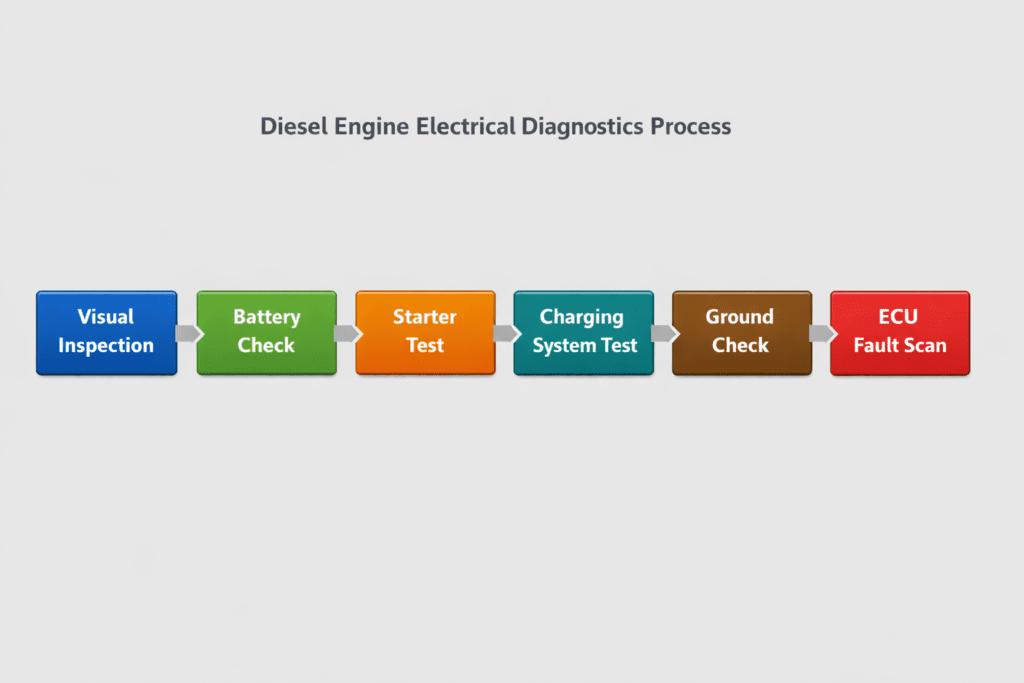
Summary: Think Like a Professional Technician
Diesel Engine Electrical diagnostics is not about memorizing numbers.
It is about:
- Understanding circuits
- Following a logical process
- Proving the fault before fixing it
Good technicians diagnose.
Poor technicians guess.
If you master electrical diagnostics, you will:
- Save time
- Save money
- Earn respect in any workshop
Learn more by following our Blog on Modern Trade Skills.