

AI Tools Every Diesel Technician Should Know About
Introduction: AI Is Already in Your Workshop
Artificial Intelligence (AI) is no longer something reserved for engineers in offices or software developers behind screens. It is already shaping the way diesel technicians diagnose faults, plan maintenance, access repair data, and manage workshops.
Many technicians are already using AI—often without realizing it. Modern scan tools, predictive maintenance software, and smart service platforms all rely on AI in some form. Understanding these tools is no longer optional; it is becoming a core skill for modern diesel technicians.
This article introduces the most important AI tools every diesel technician should know, explains how they work, and shows how they can make your job easier, faster, and more accurate.
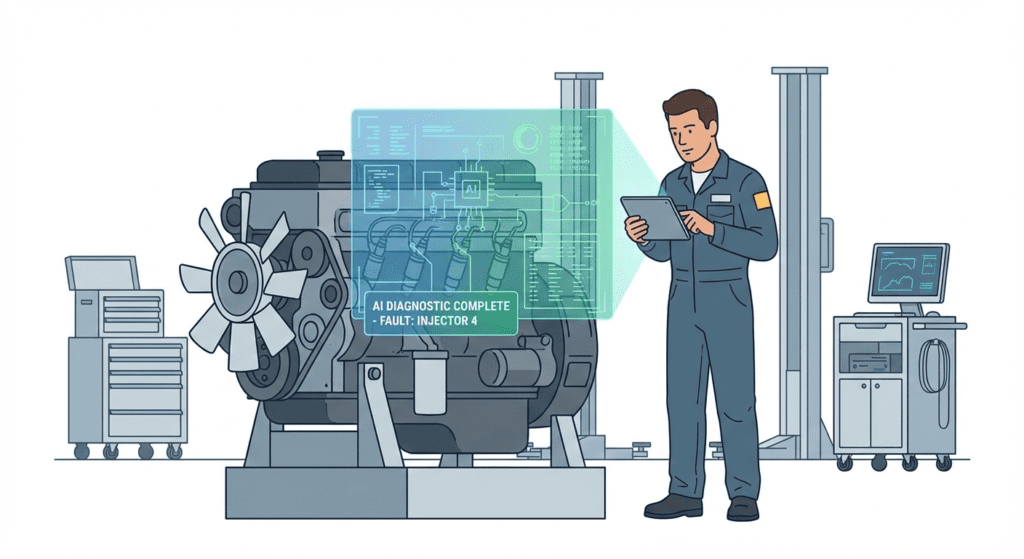
1. AI-Powered Diagnostic Tools
What They Are
AI-powered diagnostic tools analyze fault codes, sensor data, and machine history to help technicians identify problems faster than traditional methods.
Instead of only displaying fault codes, AI systems:
- Interpret fault patterns
- Suggest likely root causes
- Recommend inspection steps
How This Helps Diesel Technicians
- Reduces guesswork during troubleshooting
- Saves time on complex electrical and electronic faults
- Helps junior technicians learn faster
Real Workshop Example
A modern engine throws multiple fault codes related to fuel pressure, EGT sensors, and derate conditions.
An AI-enabled diagnostic tool analyzes live data and historical faults, suggesting:
- A failing pressure sensor rather than a fuel pump
- Likely wiring degradation due to heat exposure
This saves hours of unnecessary component replacement.
Typical Use Cases
- Electronic engines (common rail, emissions systems)
- CAN bus and sensor-related faults
- Intermittent engine derates
2. Predictive Maintenance AI Tools
What They Are
Predictive maintenance tools use AI to analyze trends from:
- Engine hours
- Oil condition
- Vibration
- Temperature
- Historical breakdown data
They predict failures before they happen.
Why This Matters
Traditional maintenance is either:
- Reactive (fix after failure), or
- Preventive (fixed intervals, often too late or too early)
AI makes maintenance predictive, which means:
- Reduced breakdowns
- Lower repair costs
- Less downtime
Example
An AI system flags abnormal turbo temperature trends long before failure.
The technician schedules inspection during planned downtime instead of responding to a roadside breakdown.
Who Benefits Most
- Fleet workshops
- Mining and construction equipment
- Long-haul transport operations
3. AI-Based Technical Information & Repair Assistants
What They Are
AI tools that search, summarize, and explain:
- OEM service manuals
- Wiring diagrams
- Fault trees
- Repair procedures
Instead of scrolling through hundreds of PDF pages, technicians can ask questions in plain language.
Example Questions
- “What causes low rail pressure on this engine?”
- “Torque sequence for cylinder head bolts?”
- “Steps to recalibrate injectors after replacement?”
The AI responds with clear, step-by-step guidance.
Why Technicians Like This
- Faster access to correct information
- Reduced errors from outdated manuals
- Useful for both apprentices and senior technicians
4. AI Tools Every Diesel technician Should Know for Electrical and Electronic Troubleshooting
The Problem
Electrical faults are one of the biggest challenges in modern diesel systems:
- Multiple sensors
- Shared grounds
- CAN networks
- Software-controlled logic
How AI Helps
AI tools analyze:
- Voltage patterns
- Signal behavior
- Network communication
They help identify:
- Short circuits
- Open circuits
- Sensor failures
- Control module issues
Practical Benefit
Instead of replacing parts blindly, technicians get probable fault locations, saving time and money.
5. AI-Powered Workshop Management Tools
What They Do
These tools use AI to optimize:
- Job scheduling
- Technician allocation
- Service intervals
- Workload balancing
For Supervisors and Senior Technicians
AI helps answer questions like:
- Which jobs should be prioritized today?
- Which technician is best suited for a specific repair?
- Where are we losing time in the workflow?
Benefits
- Improved productivity
- Reduced job delays
- Better use of technician skills
6. AI Inventory and Parts Management Tools
The Challenge
Parts shortages and overstocking cost workshops money.
AI Solution
AI inventory tools:
- Track parts usage trends
- Predict future demand
- Flag slow-moving stock
- Suggest reorder timing
Result
- Fewer delays waiting for parts
- Reduced capital tied up in unused stock
- Better planning for major overhauls
7. AI Tools Every Diesel technician Should Know for Learning and Skill Development
Why This Is Important
Diesel technology is evolving faster than ever:
- Emissions systems
- Hybrid drivetrains
- Advanced electronics
AI learning tools help technicians:
- Learn new systems faster
- Practice diagnostics virtually
- Test knowledge with smart quizzes
Examples
- AI-powered simulations of engine faults
- Step-by-step guided troubleshooting
- Personalized learning recommendations
This is especially valuable for:
- Apprentices
- Junior artisans
- Technicians moving into supervisory roles
8. AI Tools Every Diesel technician Should Know for Reporting and Documentation
What They Do
AI tools automatically generate:
- Diagnostic reports
- Inspection summaries
- Customer explanations
Why This Matters
Good documentation:
- Protects technicians
- Improves customer trust
- Supports warranty claims
AI ensures reports are:
- Clear
- Accurate
- Professional
9. AI for Safety and Compliance
How AI Improves Safety
AI tools can:
- Identify unsafe working conditions
- Analyze incident trends
- Ensure compliance with service procedures
Example
An AI system flags repeated unsafe practices during brake servicing, prompting corrective training.
Safety-focused AI is becoming increasingly important in large workshops and industrial environments.
10. Free vs Paid AI Tools: What Technicians Should Know
Free AI Tools
- General AI assistants for explanations
- Learning and troubleshooting help
- Basic documentation support
Good for:
- Apprentices
- Individual technicians
- Learning and reference
Paid AI Tools
- OEM-integrated diagnostics
- Predictive maintenance platforms
- Workshop management systems
Best for:
- Fleet operations
- Large workshops
- Supervisors and managers
Final Thoughts: AI Is a Tool, Not a Replacement
AI will not replace diesel technicians.
But technicians who know how to use AI will replace those who don’t.
AI tools:
- Enhance diagnostic accuracy
- Reduce unnecessary labor
- Improve learning and efficiency
The key is not to fear AI, but to understand it and use it as another tool in your toolbox, just like a multimeter or scan tool.
Many OEMs, like Caterpillar are investing heavily in AI.