

How Modern Diesel Engines Power Heavy Equipment (2026 Technician Guide)
Introduction
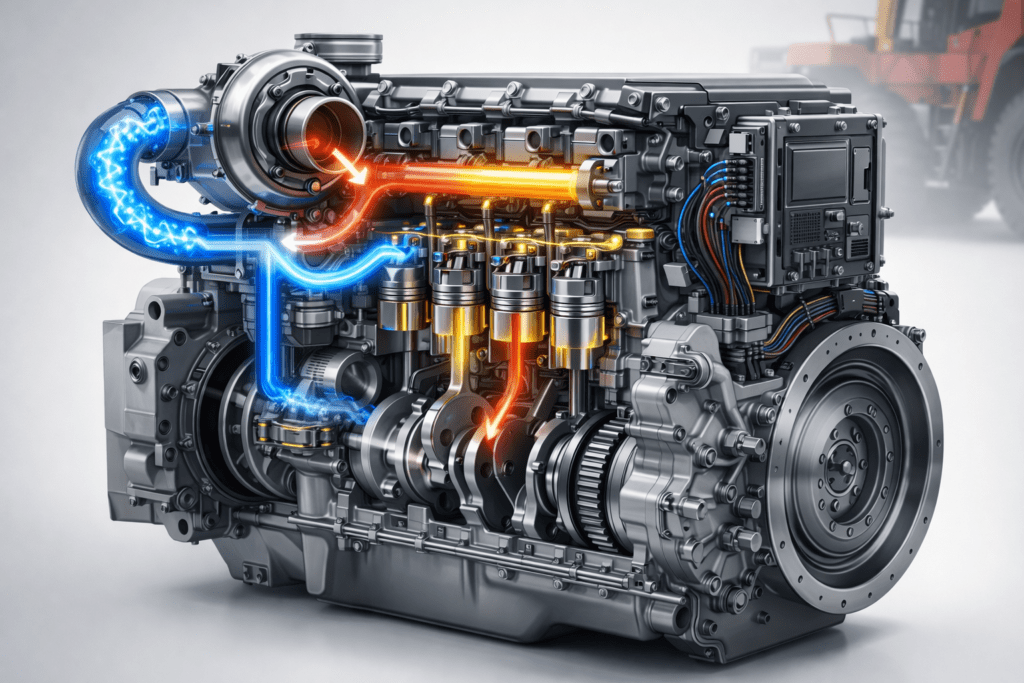
Modern heavy equipment depends on advanced diesel engines designed to deliver high torque, fuel efficiency, durability, and emissions compliance.
Machines from manufacturers such as Caterpillar, Komatsu, and Volvo Construction Equipment use electronically controlled diesel engines that are far more complex than older mechanical systems.
For today’s technician, understanding how modern diesel engines operate is no longer optional — it is foundational to diagnosing power loss, emission faults, overheating, and derating issues.
This guide explains how modern diesel engines power heavy equipment — from combustion to electronic control — with a strong maintenance and diagnostics focus.
1️⃣ The Role of Diesel Engines in Heavy Equipment
Heavy equipment engines are designed for:
- High torque at low RPM
- Continuous load operation
- Fuel efficiency under extreme conditions
- Long service intervals
- Emission compliance (Tier 4 Final / Stage V)
Unlike automotive engines, heavy equipment diesel engines prioritize torque over speed.
Torque is what allows:
- Excavators to lift loads
- Loaders to push material
- Dozers to move earth
- Haul trucks to carry heavy payloads
Understanding torque curves is critical when diagnosing low-power complaints.
2️⃣ Core Components of a Modern Diesel Engine
🔧 Engine Block & Rotating Assembly
- Pistons
- Connecting rods
- Crankshaft
- Cylinder liners
These components convert combustion energy into rotational force.
Maintenance focus:
- Oil quality
- Bearing wear
- Compression testing
- Blow-by measurement
💨 Air Intake & Turbocharging System
Modern engines use:
- Turbochargers (often VGT – Variable Geometry Turbo)
- Charge air coolers
- Boost pressure sensors
Turbocharging increases air density, allowing more fuel to burn efficiently.
Common diagnostic issues:
- Low boost pressure
- Turbo actuator faults
- Charge air leaks
- Excessive exhaust smoke
⛽ High-Pressure Common Rail Fuel System
Modern systems use:
- High-pressure fuel pump
- Common rail accumulator
- Electronic injectors
- Rail pressure sensors
Fuel injection pressures can exceed 30,000 psi.
Common failure signs:
- Hard starting
- Rough running
- Power loss
- White or black smoke
Technicians must understand both mechanical and electronic diagnostics here.
3️⃣ Electronic Engine Control (ECU)
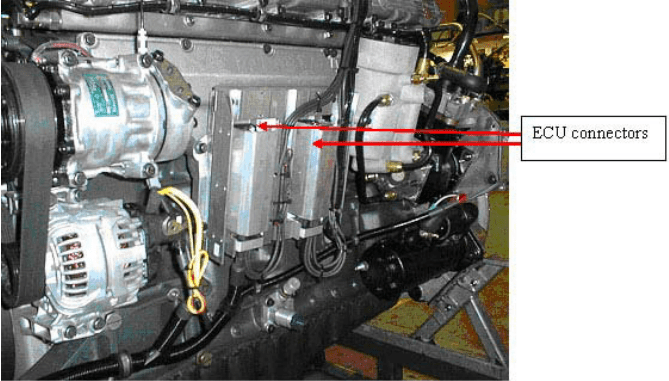
Unlike older mechanical engines, modern diesel engines rely on an Engine Control Unit (ECU).
The ECU monitors:
- Fuel pressure
- Boost pressure
- Engine temperature
- Exhaust temperature
- NOx levels
- Crankshaft position
It adjusts:
- Injection timing
- Fuel quantity
- Turbo vane position
- EGR flow
- Regeneration cycles
This is where mechanical knowledge meets electronic diagnostics.
If a sensor sends incorrect data, the ECU may:
- Reduce power (derate)
- Trigger fault codes
- Enter limp mode
4️⃣ Combustion Process in Modern Diesel Engines
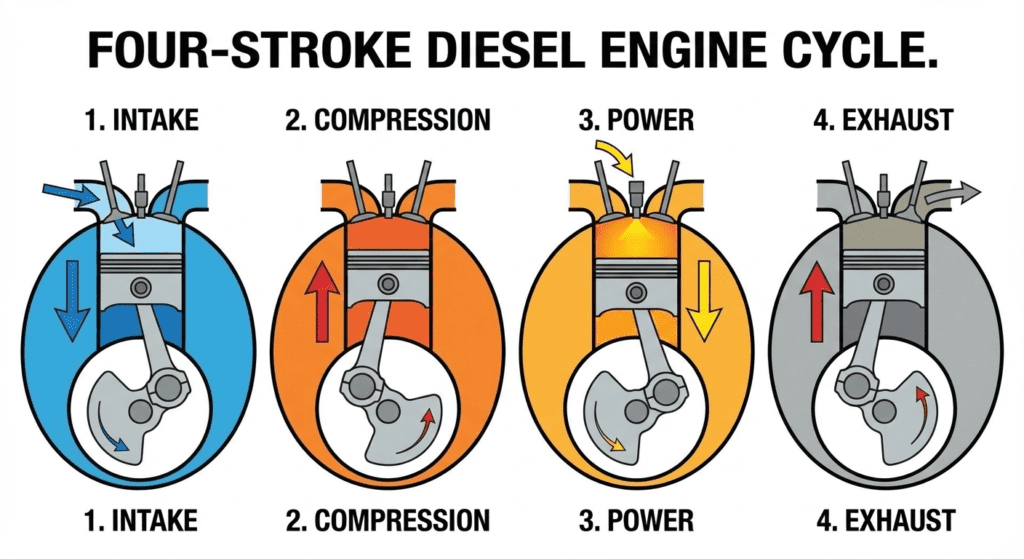
The diesel combustion cycle includes:
- Intake stroke
- Compression stroke
- Power stroke
- Exhaust stroke
High compression ignites the fuel without spark plugs.
Modern improvements include:
- Multiple injection events
- Precise timing control
- Emission optimization
Poor combustion can result in:
- Excessive soot
- High exhaust temperatures
- DPF clogging
- Increased fuel consumption
5️⃣ Emissions Integration (Tier 4 Final / Stage V)
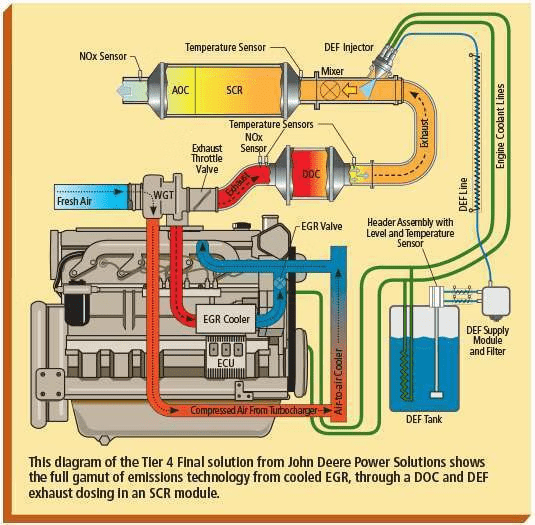
Modern engines are integrated with emission systems such as:
- EGR (Exhaust Gas Recirculation)
- DOC (Diesel Oxidation Catalyst)
- DPF (Diesel Particulate Filter)
- SCR (Selective Catalytic Reduction)
These systems reduce:
- NOx emissions
- Particulate matter
Improper maintenance can lead to:
- Forced regenerations
- Engine derates
- Expensive aftertreatment failures
Understanding the engine alone is no longer enough — you must understand the full emissions system.
6️⃣ Why Technicians Must Understand the Whole Power System
Modern diesel engines are no longer standalone mechanical units.
They are part of a complete power system including:
- Transmission
- Hydraulic pumps
- Electronic controls
- Cooling systems
- Emission aftertreatment
When diagnosing problems, technicians must think system-wide.
Example:
Low power may not be:
- Fuel issue
It could be: - Boost leak
- DPF restriction
- Sensor failure
- ECU protection strategy
System thinking separates parts changers from real diagnosticians.
7️⃣ Skills Required for 2026 Diesel Technicians
To stay competitive, technicians must understand:
- Electronic diagnostics
- Fault code interpretation
- CAN Bus communication basics
- Emission system operation
- Root cause analysis
Global markets and OEM operations increasingly demand these skills.
Conclusion
Modern diesel engines power heavy equipment through a complex integration of:
- Mechanical engineering
- Electronic controls
- High-pressure fuel systems
- Turbocharging
- Emissions technology
For today’s heavy equipment technician, mastering these systems is essential for:
- Accurate diagnostics
- Preventing repeat failures
- Career growth
- International opportunities
In the next Article, we will break down how engine power flows through the full heavy equipment powertrain.