

Latest Cat 330 Excavator (Full Technical Breakdown For Technicians)
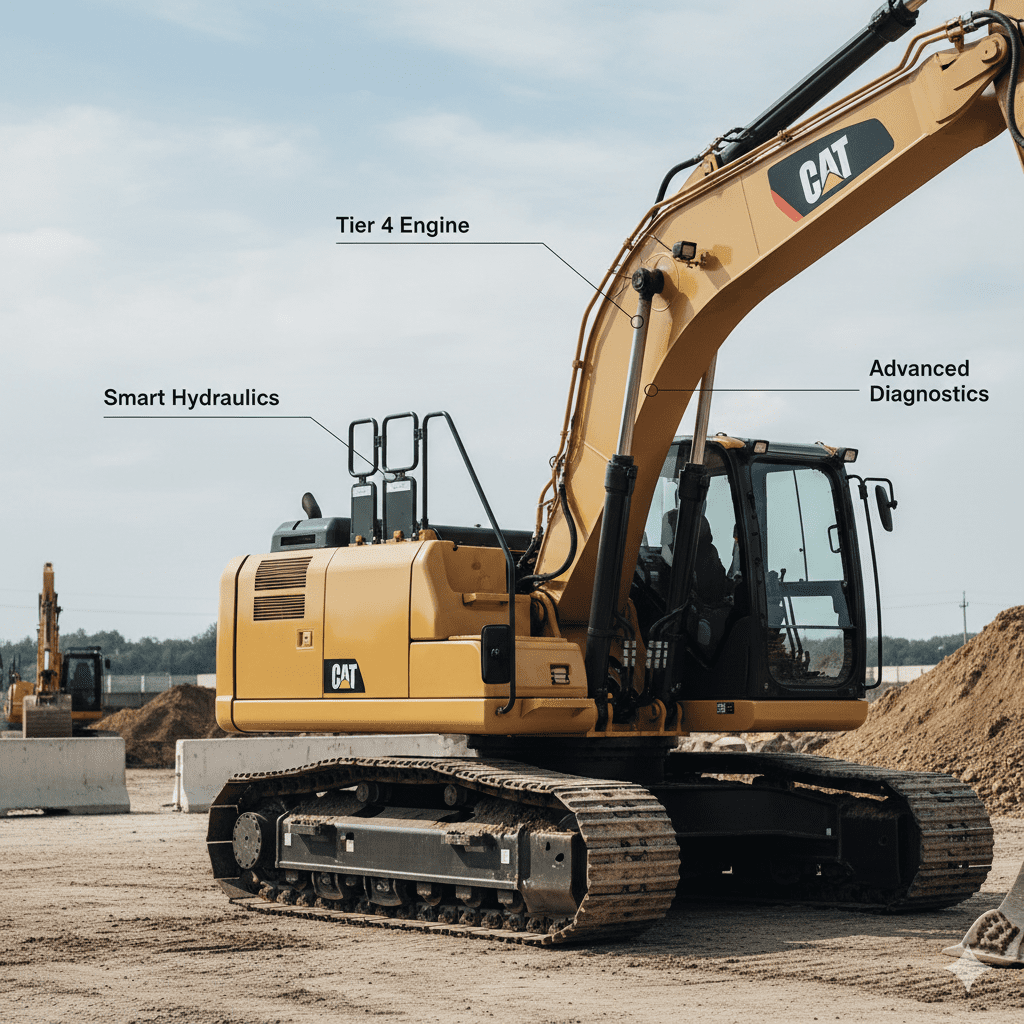
The newest generation of the Cat 330 excavator from Caterpillar Inc. continues the industry shift toward smarter hydraulics, tighter emissions control, and advanced onboard diagnostics.
But beyond the marketing — what does this machine actually mean for diesel technicians, workshop supervisors, and apprentices?
This technical review breaks it down from a service and maintenance perspective.
Overview of the Cat 330 Excavator
The Cat 330 Excavator sits in the 30-ton class and is designed for:
- Heavy construction
- Quarry operations
- Large-scale earthmoving
- Infrastructure projects
It balances power, fuel efficiency, and smart machine control systems. Compared to older 330 models, the latest version focuses heavily on:
- Improved fuel efficiency
- Integrated grade control
- Reduced emissions complexity
- Extended service intervals
Engine & Emissions System Breakdown
Engine Platform
The Cat 330 typically runs a 7-liter class diesel engine designed to meet:
- Tier 4 Final (USA)
- Stage V (Europe)
- Equivalent global emissions standards
Key Technical Features:
- High-pressure common rail fuel system
- Electronic engine control module (ECM)
- Cooled EGR system
- Diesel Oxidation Catalyst (DOC)
- Diesel Particulate Filter (DPF)
- Selective Catalytic Reduction (SCR)
Technician Insight
Modern Cat engines operate at extremely high injection pressures. This means:
- Injector contamination tolerance is lower than older models
- Fuel cleanliness standards are critical
- Calibration procedures must be followed precisely
DPF and SCR systems add complexity. Fault tracing now often involves:
- NOx sensor diagnostics
- DEF quality testing
- Temperature sensor verification
- Aftertreatment regeneration history review
Apprentices must understand that emissions diagnostics is now as important as mechanical repair.
Hydraulic System & Smart Features
The latest Cat 330 incorporates:
- Electronically controlled main hydraulic pumps
- Pressure-compensated flow systems
- Integrated grade control sensors
- Boom, stick, and bucket position sensors
Smart Machine Capabilities:
- Grade Assist
- Payload monitoring
- Operator efficiency tracking
- In-cab touchscreen diagnostics display
Service Considerations
More sensors mean:
- More potential electrical faults
- Increased importance of wiring harness inspection
- CAN bus system familiarity is mandatory
Hydraulic troubleshooting now includes both mechanical pressure testing AND electronic data interpretation.
Electrical & Diagnostic Architecture
Modern Cat machines integrate:
- Multiple control modules
- CAN data networks
- Telematics connectivity
- Remote fault reporting capability
What This Means in the Workshop:
Technicians must:
- Use OEM diagnostic software regularly
- Understand live data monitoring
- Diagnose intermittent communication faults
- Interpret active vs logged codes correctly
This is no longer purely a mechanical machine — it is a networked electronic system on tracks.
Comparison to Previous Generation Cat 330
| Feature | Older Model | Latest Model |
|---|---|---|
| Emissions | Tier 3 / Early Tier 4 | Tier 4 Final / Stage V |
| Diagnostics | Basic fault codes | Advanced onboard analytics |
| Fuel Efficiency | Standard | Improved fuel mapping |
| Hydraulics | Mechanical assist | Fully electronically optimized |
| Operator Interface | Basic monitor | Touchscreen smart display |
The shift is clear: less manual adjustment, more electronic precision.
What This Means for Technicians
1. Electrical Skills Are Now Mandatory
You cannot work on this machine without understanding:
- Sensor circuits
- Data networks
- Electronic control modules
2. Cleanliness Standards Are Higher
Fuel system and emissions components are sensitive. Contamination control procedures must improve.
3. Software Familiarity Is Critical
Laptop diagnostics is no longer optional — it’s daily practice.
4. Apprentices Must Learn Hybrid Skills
Mechanical + electrical + digital diagnostics.
Is the New Cat 330 Easier or Harder to Maintain?
Mechanically:
✔ Better engineered
✔ Improved accessibility
✔ Longer service intervals
Electronically:
⚠ More complex
⚠ Requires higher diagnostic skill
⚠ Greater dependence on OEM tooling
The machine itself is more efficient and refined — but technician competency must rise to match it.
Final Verdict – From a Trades Perspective
The latest Cat 330 is not just an excavator upgrade — it represents the future direction of heavy equipment:
- Integrated intelligence
- Emission-driven engineering
- Diagnostic-based maintenance
- Reduced operator error through automation
For apprentices and tradesmen in Africa and globally, this machine signals one thing clearly:
The future diesel technician must become a systems technician.