

Why Heavy Equipment Trade Shows Still Matter in a Digital World
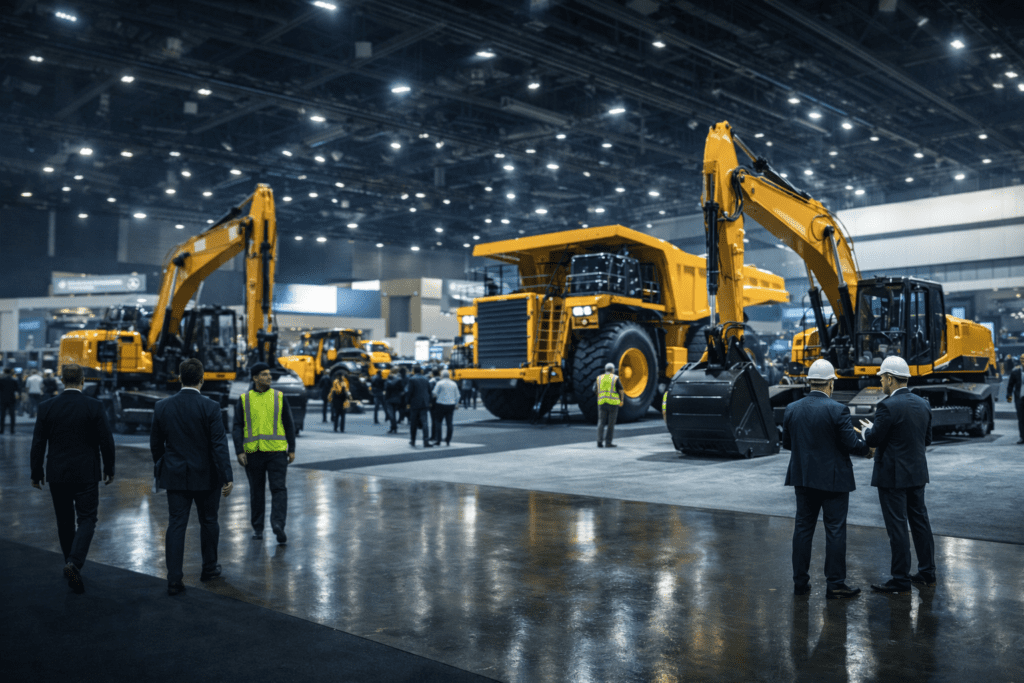
The heavy equipment industry is more connected than ever. Product launches stream live. Spec sheets are downloadable instantly. Social media reveals new machines before they reach job sites.
So a fair question arises:
Do heavy equipment trade shows still matter?
The short answer — absolutely.
But not for the reasons most people think.
Trade shows are no longer just about seeing new machines. They are about understanding where the industry is heading — technically, operationally, and strategically.
The Role of Major Global Events
Events like:
are not just exhibitions. They are signals of industry direction.
CONEXPO-CON/AGG – Technology Acceleration
At CONEXPO, the focus increasingly shifts toward:
- Hybrid systems
- Electrification
- Remote diagnostics
- Smart machine control
- Fleet connectivity
For workshops, this means:
- Investment in diagnostic tooling
- Technician upskilling in electronics
- Higher exposure to software-based troubleshooting
bauma – Future Power Systems & Emissions
bauma traditionally sets the tone for:
- Alternative fuels
- Hydrogen concepts
- Stage V emissions advancements
- Electric heavy equipment
From a maintenance perspective, this signals:
- Increased emissions complexity
- High-voltage safety requirements
- Cooling system redesigns
- Hybrid drivetrain servicing knowledge
MINExpo – Mining at Scale
Mining events highlight:
- Autonomous haul trucks
- Ultra-class electric fleets
- Predictive maintenance systems
- Fleet management integration
For mining workshops, the implications are significant:
- Sensor-heavy systems
- Software diagnostics
- Data analysis capability
- Reduced tolerance for mechanical-only skillsets
Trade Shows as Technology Forecasts
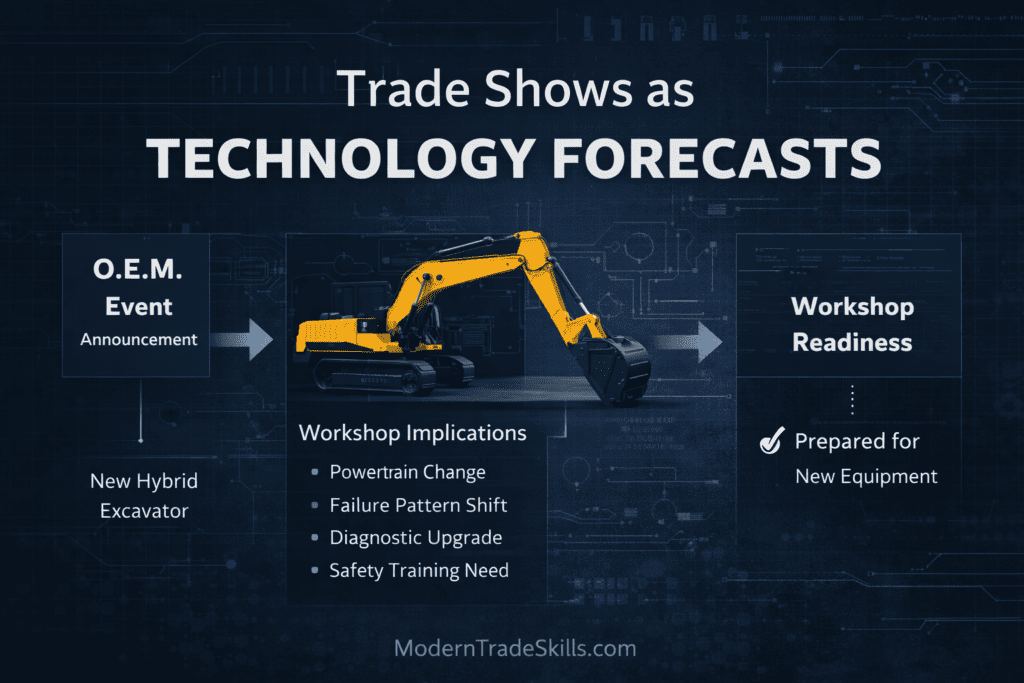
Trade shows act as a 3–5 year preview of what workshops will face.
When an OEM launches a hybrid excavator, that is not just marketing — it is:
- A change in powertrain architecture
- A new failure pattern profile
- A shift in tooling requirements
- A new training demand
Workshops that ignore trade show trends often get caught unprepared when those machines reach the field.
Why Digital Announcements Are Not Enough
You can read a brochure online.
You can watch a product video.
But trade shows reveal:
- Where OEMs invest the most floor space
- Which technologies receive real engineering emphasis
- Which prototypes are moving toward production
- Which ideas are quietly disappearing
This context matters.
Marketing material shows what OEMs want you to see.
Trade shows show what they are committing to.
What This Means for Technicians
If you are a diesel technician, workshop supervisor, or fleet manager, OEM events are early warning systems.
They tell you:
- What training you will need next
- What diagnostic software to learn
- What safety certifications to pursue
- What tooling budgets to prepare for
Technicians who align their skills with event trends stay ahead of the curve.
What This Means for African Workshops
In many African markets, new technologies arrive later — but they arrive eventually.
By studying global trade shows:
- Workshops can plan infrastructure upgrades early
- Managers can budget for tooling in phases
- Training gaps can be identified before machines land locally
Prepared workshops reduce downtime, risk, and costly reactive spending.
Frequently Asked Questions About Heavy Equipment Trade Shows
1. Why are heavy equipment trade shows important for workshops?
Heavy equipment trade shows act as early indicators of technology shifts. They reveal new powertrain designs, emissions systems, hybrid configurations, and telematics integration before those machines reach field operations. Workshops that monitor these trends can prepare tooling, training, and infrastructure in advance instead of reacting later.
2. Do technicians really need to follow OEM trade shows?
Yes. Modern equipment is increasingly electronic, software-driven, and data-dependent. By following OEM events, technicians can anticipate required certifications, high-voltage safety training, advanced diagnostics knowledge, and emissions system expertise.
Technicians who align with industry trends remain employable and competitive.
3. What technologies are commonly introduced at global trade shows?
Common themes include:
- Hybrid and electric powertrains
- Hydrogen-powered prototypes
- Advanced emissions systems
- Telematics and fleet connectivity
- Autonomous and semi-autonomous systems
- Predictive maintenance software
These innovations directly influence workshop workflows.
4. Are trade show announcements just marketing?
Not entirely.
While marketing is part of the presentation, trade shows reveal where OEMs are investing real engineering resources. Floor space allocation, prototype maturity, and repeat technology themes often indicate which systems will enter production in the next 3–5 years.
5. How can African workshops benefit from global trade show trends?
Although some markets receive new technologies later, preparation can begin immediately. Workshops can:
- Budget for future diagnostic tools
- Upskill technicians gradually
- Improve electrical safety standards
- Prepare for emissions system complexity
This reduces downtime and financial shock when advanced equipment arrives.
6. Which are the most influential heavy equipment trade shows globally?
Some of the most influential include:
- CONEXPO-CON/AGG
- bauma
- MINExpo International
Each event highlights different segments of the industry, from construction to mining to future power systems.
Final Perspective: Heavy Equipment Trade Shows Are Strategy Indicators
Heavy equipment trade shows are no longer about shiny machines.
They are:
- Technology roadmaps
- Skill development indicators
- Investment signals
- Industry direction markers
Ignoring them is like ignoring a forecast before a storm.
For workshops aiming to remain competitive in a rapidly evolving industry,heavy equipment trade shows remain one of the clearest signals of what comes next.