

What Technicians Should Look for at Global Equipment Expos
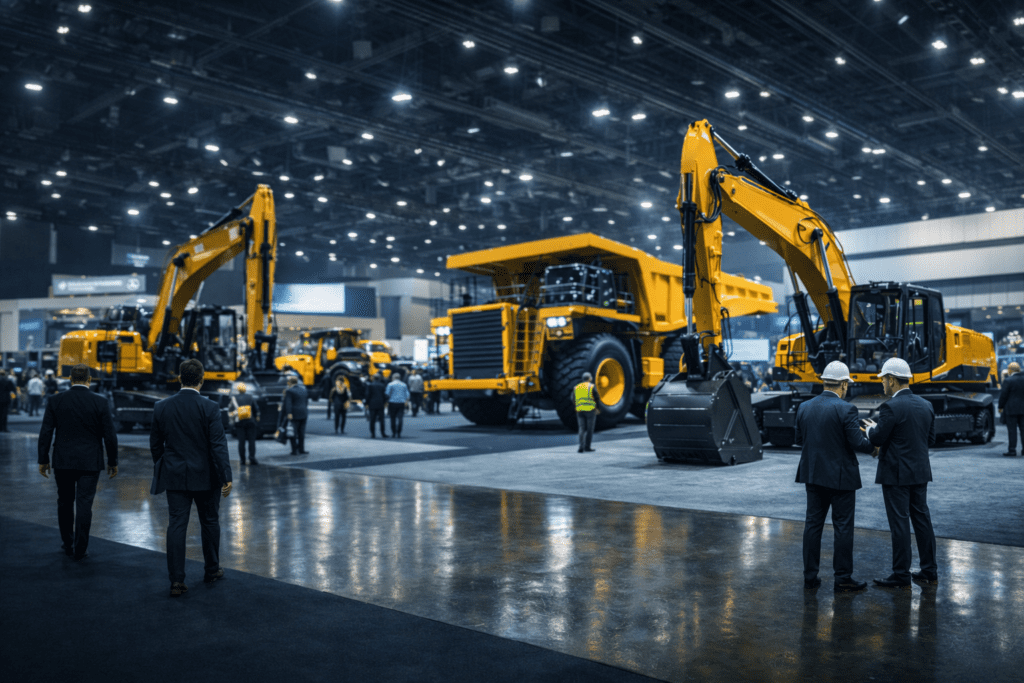
Walking through a major heavy equipment trade show can feel overwhelming.
Massive machines. Bright lighting. Digital displays. Marketing teams. Product demonstrations.
But for a serious diesel technician or workshop supervisor, the purpose of attending — or even studying — global equipment expos is not entertainment.
It is preparation.
Events like CONEXPO-CON/AGGconexpoconagg.com/, bauma, and MINExpo International are not just exhibitions. They are technical roadmaps.
Here is what technicians should truly pay attention to.
1️⃣ Powertrain Architecture Changes
The first area to analyze is the powertrain.
Ask yourself:
- Is this still a conventional diesel configuration?
- Has a hybrid system been integrated?
- Is there an electric assist motor?
- Is energy recovery used during swing or braking?
When OEMs introduce hybrid excavators or electric mining trucks, they are not just changing the fuel source — they are changing:
- Failure patterns
- Diagnostic procedures
- Safety protocols
- Component access layouts
A technician who understands powertrain evolution stays ahead of future breakdowns.
2️⃣ Emissions System Complexity
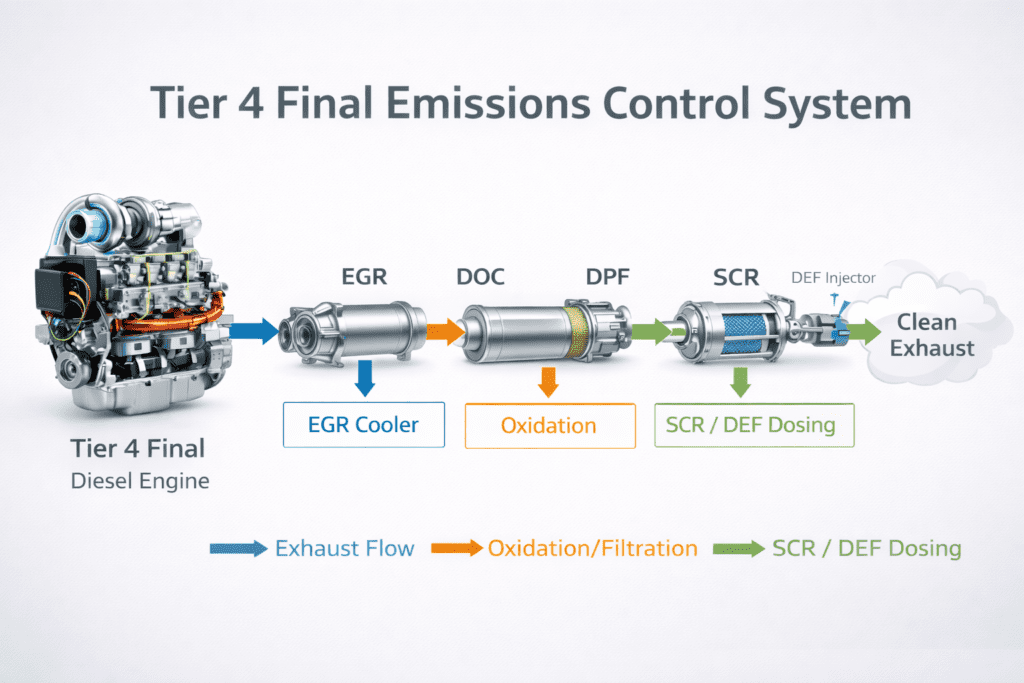
Modern emissions systems are increasingly sophisticated.
At trade shows, look for:
- SCR and DEF system layout changes
- DPF regeneration strategies
- Additional NOx or temperature sensors
- Redesigned aftertreatment packaging
If a machine introduces additional sensors or control modules, this directly impacts workshop tooling and troubleshooting flow.
More sensors mean:
- More fault codes
- More wiring diagnostics
- More software dependency
Technicians must recognize that emissions systems are now as critical as mechanical components.
3️⃣ Diagnostic Software & Telematics Integration
One of the biggest shifts visible at global equipment expos is digital integration.
OEM booths increasingly highlight:
- Remote diagnostics
- Cloud-based monitoring
- Predictive maintenance dashboards
- Over-the-air software updates
This signals a major industry change.
Technicians must develop:
- Comfort with laptops and tablets
- Software navigation skills
- Data interpretation ability
- Communication with OEM technical support systems
Mechanical skill alone is no longer sufficient.
4️⃣ Electrical and High-Voltage Systems
Electric and hybrid equipment introduces:
- High-voltage battery packs
- Inverters and converters
- Isolation monitoring systems
- Advanced cooling systems
Even if these machines are not yet common in your region, they will arrive eventually.
Technicians should start asking:
- Do I understand high-voltage safety procedures?
- Does my workshop have insulated tools?
- Are we prepared for battery handling?
Global equipment expos provide early exposure to these systems.
5️⃣ Hydraulic System Evolution
Hydraulics remain central in heavy equipment, but they are evolving.
Look for:
- Electro-hydraulic control systems
- Energy recovery systems
- Load-sensing enhancements
- Digitally controlled valves
This increases the overlap between hydraulic and electronic diagnostics.
The future technician must be both:
- Mechanically strong
- Electronically fluent
6️⃣ Serviceability & Access Design
Another overlooked factor at trade shows is machine accessibility.
Study:
- Engine bay layout
- Filter positioning
- Access panel design
- Modular component grouping
Ask:
Is this design improving serviceability — or complicating it?
Sometimes innovation increases maintenance time.
Good technicians analyze this critically.
7️⃣ Training Signals from OEMs
At events like CONEXPO-CON/AGG and bauma, OEMs often promote:
- Digital training platforms
- Simulation-based learning
- Certification programs
When training is heavily promoted, it indicates complexity is increasing.
If OEMs are investing in training infrastructure, workshops should be as well.
The Mindset Shift: From Repair to Systems Thinking
Modern trade shows reveal a clear trend:
Heavy equipment is becoming an integrated system of:
- Mechanical components
- Electronics
- Software
- Sensors
- Data analytics
Technicians who only focus on mechanical repair risk being left behind.
Those who analyze systems — and understand how power, control, and data interact — will lead the industry.
What This Means for African and Emerging Markets
Even if advanced hybrid machines are not common locally, the technology pipeline is clear.
Preparation should begin with:
- Electrical fundamentals
- Diagnostic software literacy
- Emissions system mastery
- Safety upgrades
The goal is not immediate adoption.
It is strategic readiness.
Final Takeaway
When attending or studying a global OEM trade show, do not ask:
“What machine is the biggest?”
Ask instead:
“What skill will this machine require five years from now?”
Trade shows are not just product showcases.
They are technical forecasts.
Technicians who study them carefully gain a competitive advantage long before the first machine arrives in their workshop.
FAQ Section
Why should technicians follow heavy equipment trade shows?
Trade shows reveal future technology trends that will influence diagnostics, tooling requirements, and required certifications.
What is the biggest trend at modern OEM events?
Electrification, hybridization, advanced telematics, and predictive maintenance integration.
How can technicians prepare for future equipment?
By improving electrical knowledge, learning diagnostic software, and understanding emissions systems in depth.