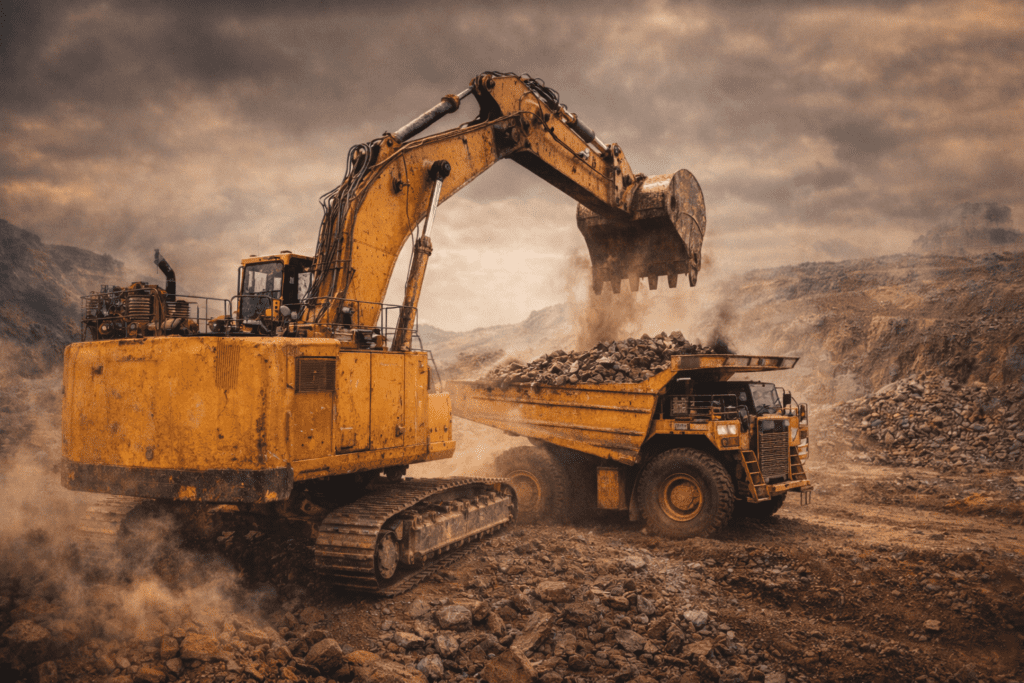
Cat 6030 and Cat 6040 hydraulic mining excavators are among the most productive machines in large-scale mining operations.
But when failure occurs, the impact is significant:
- Massive production loss
- High component replacement cost
- Extended downtime
- Secondary damage escalation
Effective Cat 6030 and 6040 maintenance requires more than mechanical skill.
It requires structured diagnostics.
This article outlines common failure patterns seen in Cat 6030 and Cat 6040 excavators — and how disciplined troubleshooting prevents repeat breakdowns.
Understanding the Scale of Cat 6030 / 6040 Operations
These machines operate under:
- Extreme digging loads
- Continuous duty cycles
- High hydraulic system pressure
- Electronic engine management
- Advanced cooling and lubrication systems
The Cat 6030 and Cat 6040 are not standard excavators.
They are integrated systems combining:
- Large displacement diesel engines
- High-capacity hydraulic pumps
- Electronic control modules
- Complex electrical harness networks
- High-stress structural components
When one subsystem weakens, failure spreads quickly.
Common Failure Patterns in Cat 6030 & Cat 6040 Excavators
Below are the most frequently observed Cat 6030 common problems and Cat 6040 reliability issues in mining environments.
1️⃣ Hydraulic Pump and System Pressure Instability
Large hydraulic excavator diagnostics often reveal:
- Pressure fluctuation under load
- Pump overheating
- Excessive case drain flow
- Reduced swing performance
- Slow boom response
In many cases, pump failure is blamed.
However, root causes often include:
- Contamination
- Suction restriction
- Control valve instability
- Cooling inefficiency
Before replacing a hydraulic pump in a Cat 6030 or Cat 6040:
- Measure system pressure under load
- Verify oil temperature stability
- Inspect suction lines
- Check filtration condition
Cat 6030 and 6040 maintenance failures often begin with contamination control breakdown.
2️⃣ Electrical Harness Stress and Sensor Failures
Due to machine size and vibration levels, wiring harness failures are common in mining excavators.
Typical Cat 6030 common problems include:
- Intermittent sensor faults
- CAN communication instability
- Temperature sensor discrepancies
- DEF dosing signal errors
Many of these are not sensor failures — but harness integrity issues.
Large excavator harness systems require:
- Voltage drop testing under load
- Ground verification
- Connector tension inspection
- Routing stress analysis
Assumption-based sensor replacement leads to repeat failures.
3️⃣ Cooling System Overload
Cat 6040 reliability issues frequently involve heat management.
Contributing factors:
- Dust-clogged radiators
- Reduced airflow
- High ambient temperature
- Continuous heavy digging cycles
When cooling performance drops:
- Hydraulic oil overheats
- Engine oil viscosity reduces
- Transmission stress increases
- Electronic components degrade
Heat management is critical in Cat 6030 6040 maintenance strategy.
4️⃣ Structural Fatigue and Pin Wear
High cycle mining environments accelerate:
- Boom pin wear
- Bucket linkage stress
- Swing bearing load
- Undercarriage fatigue
If lubrication intervals are inconsistent:
Metal-to-metal wear escalates rapidly.
Large hydraulic excavator diagnostics must include:
- Pin clearance measurement
- Grease distribution inspection
- Structural crack inspection
- Load distribution review
Mechanical wear patterns reveal operational stress.
Why Repeat Failures Occur on Cat 6030 & 6040
Repeat failures in mining excavators usually result from:
- Incomplete system testing
- Lack of oil analysis
- Poor contamination control
- Ignoring temperature trends
- Failure to review machine data logs
Cat 6030 and 6040 maintenance troubleshooting must be data-driven.
Replacing components without verifying system health guarantees recurring breakdowns.
Structured Diagnostic Strategy for Cat 6030 / 6040
Professional mining workshops follow a system-based approach.
Step 1 – Confirm Operating Conditions
- What load was machine under?
- Was temperature elevated?
- Was failure progressive or sudden?
- Were warning codes present?
Operating context matters.
Step 2 – Gather Measured Data
Measure:
- Hydraulic pressure under load
- Oil temperature
- Case drain flow
- Electrical voltage drop
- Engine live data readings
Measured values must be obtained before conclusions are drawn.
Step 3 – Inspect Supporting Systems
Before replacing major components:
- Inspect filtration
- Verify cooling efficiency
- Check electrical grounding
- Confirm calibration
Large mining excavators are interconnected systems.
Failure rarely exists in isolation.
Engine-Specific Failure Patterns in Cat 6030 & 6040
Large mining excavators like the Cat 6030 and Cat 6040 operate with high-displacement diesel engines under extreme load cycles. Engine-related Cat 6030 common problems often begin subtly and escalate rapidly if not diagnosed early.
Common Engine-Related Issues:
- Turbocharger stress from elevated exhaust temperatures
- High crankcase pressure under load
- Injector imbalance
- Fuel contamination
- Oil degradation from heat cycling
In many Cat 6040 reliability issues, turbocharger or injector replacement occurs without verifying:
- Oil pressure stability
- Boost pressure consistency
- Fuel pressure under load
- Crankcase ventilation condition
- Air intake restriction
Engine components fail because supporting systems are unstable.
Cat 6030 and 6040 maintenance must include structured engine diagnostics — not just component inspection.
Emissions and Aftertreatment Considerations
In Tier 4 Final configurations, emissions system failures add another layer of complexity.
Common issues include:
- DPF regeneration interruption
- DEF contamination
- NOx sensor inconsistencies
- Differential pressure sensor drift
Mining duty cycles — particularly long idle times or short haul patterns — affect regeneration efficiency.
Before replacing emissions components:
- Review soot load trends
- Verify exhaust temperature
- Analyze operator shutdown behavior
- Check harness integrity
Large hydraulic excavator diagnostics must integrate mechanical and electronic analysis.
Swing System and Hydraulic Control Stress
Cat 6030 and Cat 6040 excavators rely heavily on swing system stability for productivity.
Frequent failure patterns include:
- Swing motor overheating
- Hydraulic instability during rotation
- Pressure spikes during directional change
- Delayed response under load
Root causes often include:
- Contamination
- Improper pressure calibration
- Cooling inefficiency
- Operator cycle intensity
Replacing swing motors without reviewing hydraulic temperature and pressure trends results in repeat downtime.
Transmission and Drivetrain Stress
While excavators differ from rigid dump trucks, drivetrain components still experience extreme torque load.
Common Cat 6030 and 6040 maintenance troubleshooting scenarios involve:
- Final drive overheating
- Excess vibration
- Gear tooth wear
- Oil contamination
Structured diagnostics require:
- Temperature monitoring
- Vibration analysis
- Oil sampling
- Clearance measurement
High torque without proper lubrication control leads to cascading damage.
Preventative Maintenance Strategy for Cat 6030 & 6040
To improve long-term reliability, Cat 6030 and 6040 maintenance programs should emphasize:
1️⃣ Contamination Control
- Strict filtration discipline
- Scheduled oil analysis
- Clean oil handling procedures
2️⃣ Heat Monitoring
- Track hydraulic oil temperature
- Monitor engine coolant stability
- Inspect cooling pack cleanliness
3️⃣ Data Review Discipline
- Analyze fault codes before clearing
- Review shift logs
- Study temperature and pressure trends
4️⃣ Structured Diagnostic Culture
- Measure before replacing
- Document root causes
- Conduct failure review meetings
Preventative discipline reduces repeat Cat 6040 reliability issues significantly.
Cat 6030 / 6040 Maintenance Diagnostic Checklist
| Diagnostic Area | What to Verify |
|---|---|
| Hydraulic Pressure | Stable under load |
| Oil Temperature | Within operating range |
| Case Drain Flow | Excess leakage check |
| Electrical Grounds | Low resistance |
| Boost Pressure | Consistent under load |
| Cooling System | Clean & unrestricted |
| Oil Cleanliness | ISO code within spec |
Using a structured checklist strengthens Cat 6030 6040 maintenance reliability.
Why Large Mining Excavators Experience Repeat Failures
When Cat 6030 common problems reappear repeatedly, it often indicates:
- Weak contamination control
- Poor electrical testing discipline
- Incomplete data analysis
- Inconsistent maintenance intervals
- Lack of leadership oversight
Machines of this scale require system-based maintenance culture.
Without it, high-value components cycle repeatedly.
Frequently Asked Questions
What are the most common Cat 6030 common problems?
Hydraulic instability, electrical harness issues, cooling inefficiency, and contamination-related failures are among the most common.
Are Cat 6040 reliability issues usually component defects?
Rarely. Most failures originate from system imbalance rather than defective components.
How can mining sites reduce repeat failures on Cat 6030 & 6040?
By implementing structured diagnostics, contamination control, temperature monitoring, and data review discipline.
Is oil analysis important for large hydraulic excavator diagnostics?
Yes. Oil analysis reveals contamination and wear patterns before catastrophic failure occurs.
Final Insight
Cat 6030 and Cat 6040 excavators are not just machines.
They are integrated hydraulic, mechanical, and electronic systems operating under extreme stress.
Effective Cat 6030 6040 maintenance depends on:
- Structured diagnostics
- Data-driven decision making
- Heat management
- Contamination control
- Leadership discipline
Replacing components without verifying system health guarantees repeat downtime.
Mining operations that adopt diagnostic discipline extend component life, reduce downtime, and protect production.
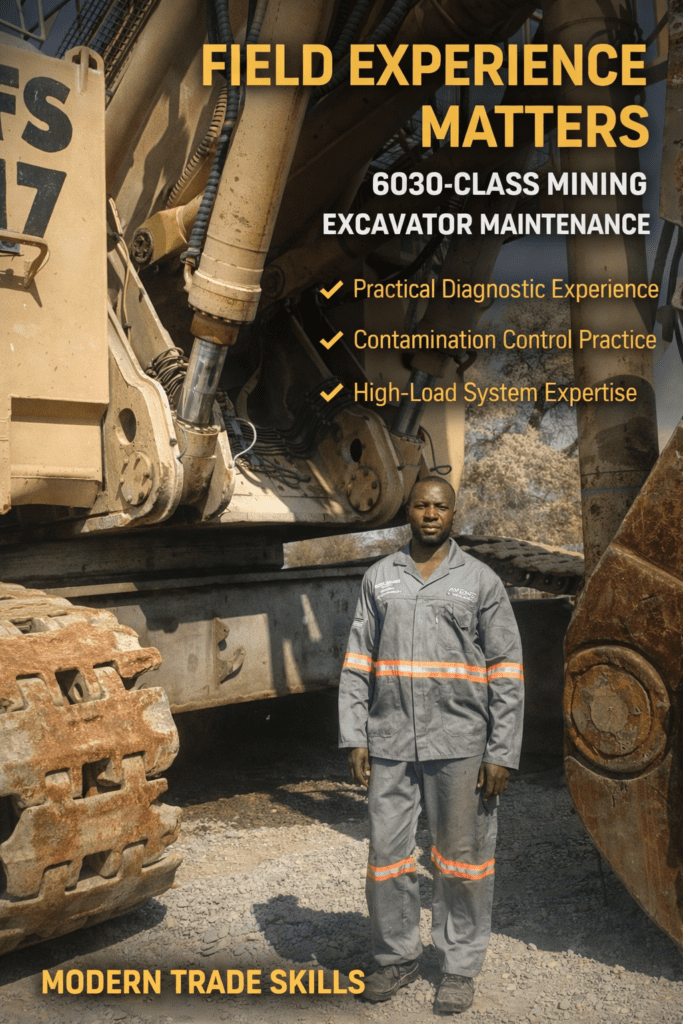
Field Experience Matters