

Why Diesel Engines Give Warning Signs
Diesel engines are strong, but they always communicate when something is wrong.
They don’t talk with words — they talk with:
- Smoke
- Noise
- Vibration
- Hard starting
- Loss of power
As a technician or apprentice, your job is to listen, observe, and interpret these signs before a small problem becomes a big failure.
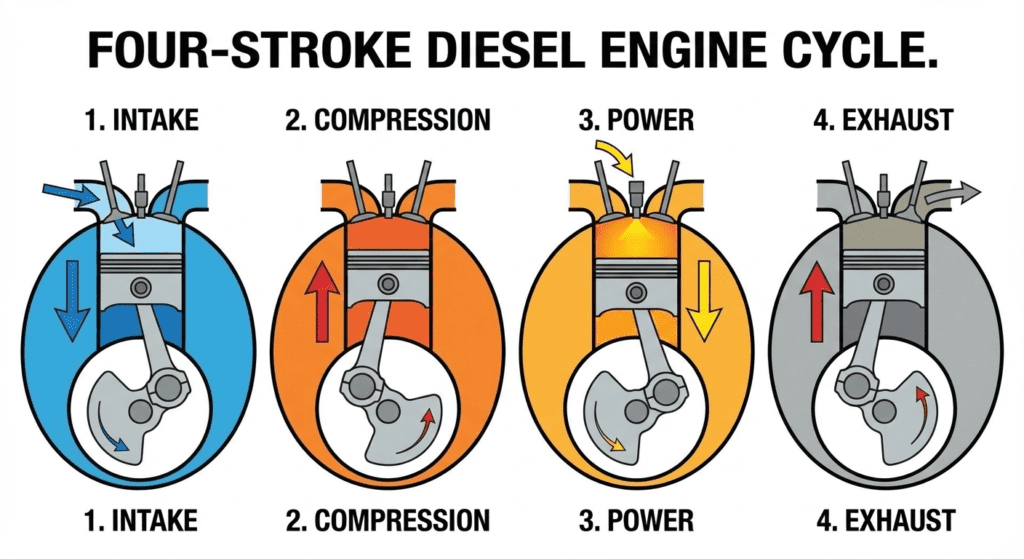
1. Hard Starting (Especially in the Morning)
What You Notice
- Engine cranks for a long time
- Needs repeated attempts to start
- Worse when cold
What It Usually Means
- Weak or faulty glow plugs
- Air in the fuel system
- Low compression
- Poor fuel quality
Workshop Tip
On trucks and generators, always:
- Check fuel filters first
- Look for air leaks at fuel lines
- Test glow plugs before replacing injectors
👉 Many “injector problems” are actually fuel supply issues.
2. Blue Smoke From the Exhaust
What You Notice
- Blue or bluish-grey smoke
- Often worse at start-up or under load
What It Usually Means
- Engine oil is burning
- Worn piston rings
- Worn valve seals
- Turbocharger oil seal failure
African Workshop Reality
In hot, dusty environments:
- Poor air filtration accelerates engine wear
- Skipped oil changes make the problem worse
👉 Blue smoke = oil going where it shouldn’t
3. Black Smoke Under Load
What You Notice
- Thick black smoke when accelerating
- Loss of power
- High fuel consumption
What It Usually Means
- Too much fuel, not enough air
- Blocked air filter
- Faulty turbocharger
- Dirty injectors
Practical Example
On excavators and haul trucks:
- A blocked air filter can cause more black smoke than a bad injector
- Always inspect the intake system before touching the fuel system
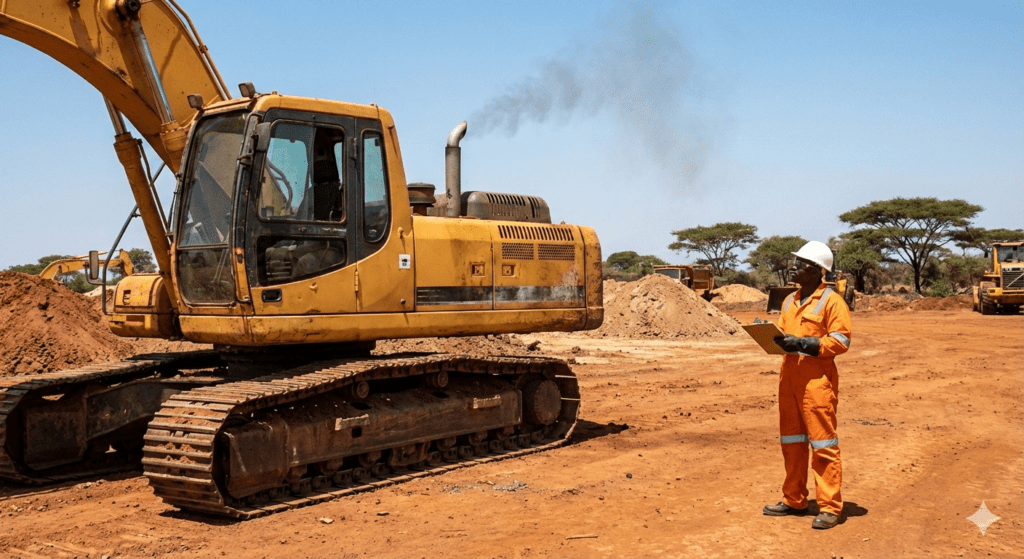
4. White Smoke
What You Notice
- White smoke, especially at cold start
- Engine runs rough initially
What It Usually Means
- Unburned fuel
- Low compression
- Incorrect injection timing
- Cold engine conditions
Important Safety Note
White smoke with coolant loss may indicate:
- Head gasket failure
- Cracked cylinder head
👉 Never ignore coolant loss.
5. Knocking or Unusual Mechanical Noises
What You Notice
- Loud knocking sounds
- Metallic tapping
- Noise increases with engine speed
What It Usually Means
- Injector malfunction
- Incorrect injection timing
- Worn bearings
- Excessive engine wear
Apprentice Advice
Never increase engine speed to “test the noise”.
You may turn damage into destruction.
6. Excessive Engine Vibration
What You Notice
- Engine shaking more than normal
- Vibrations felt in the cab
- Loose components nearby
What It Usually Means
- Misfiring cylinder
- Engine mount failure
- Poor injector spray pattern
- Mechanical imbalance
Real-World Example
On generators:
- Vibration often damages alternators before the engine fails
- Always inspect mounts and alignment
7. Loss of Power
What You Notice
- Machine feels weak
- Cannot pull load
- Slow response
What It Usually Means
- Fuel restriction
- Turbocharger problems
- Sensor issues (electronic engines)
- Exhaust blockage
Quick Workshop Check
- Check fuel filters
- Inspect exhaust system
- Look for warning lights or fault codes
Safety Notes for Apprentices
- Never diagnose with loose clothing near moving parts
- Always isolate before inspections
- Use hearing protection when engines are running
- Never work alone around heavy equipment
Safety is part of being a professional technician.
Final Summary
Diesel engines rarely fail suddenly.
They warn you first.
By learning to:
- Observe smoke
- Listen to noises
- Feel vibrations
- Understand symptoms
You become faster, safer, and more valuable as a technician.
Call to Action
If you’re an apprentice:
- Learn symptoms before tools
- Start with basics
- Respect safety procedures
Follow ModernTradeSkills for real-world diesel knowledge built from experience — not guesswork.
For a detailed breakdown of causes, see our guide on diesel engine problems and their causes