

How Diesel Engine Air Intake Systems Work
Diesel engines need clean air, fuel, and compression to make power.
If any of these is missing, the engine will lose power, smoke, or overheat.
In this lesson, we will explain air intake systems, turbochargers, and intercoolers in simple workshop language. This is written for apprentice diesel mechanics and heavy equipment technicians.
Why Air Is Critical in a Diesel Engine
A diesel engine does not use spark plugs.
It relies on hot compressed air to burn fuel.
The more clean air the engine gets:
- The better the combustion
- The more power the engine produces
- The lower the fuel consumption
In heavy equipment like excavators, loaders, and haul trucks, engines work under heavy load all day. These machines need large amounts of clean air to perform properly.
Workshop example:
An excavator digging in dusty conditions starts losing power. The problem is often a blocked air filter, not the fuel system.
Diesel Engine Air Intake System – The Basics
The air intake system brings clean air from outside into the engine.
Main Air Intake Components
- Air filter
- Pre-cleaner (cyclone type)
- Intake piping
- Intake manifold
The air filter removes dust before air enters the engine.
The pre-cleaner removes large dust particles before they reach the filter.
African Working Conditions
In many African mines and construction sites:
- Dust levels are very high
- Machines work long hours
- Maintenance intervals are sometimes stretched
This makes daily air system checks very important.
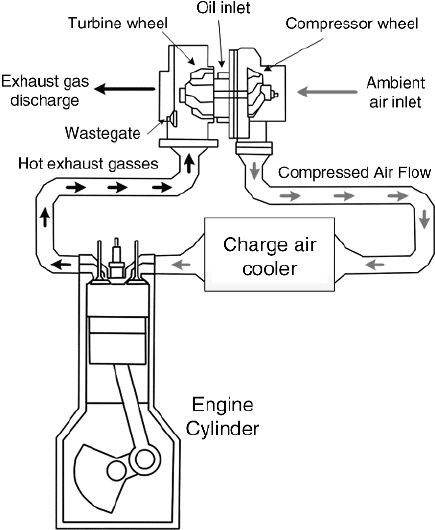
What Is a Turbocharger? (Explained Simply)
A turbocharger helps the engine breathe better.
It uses exhaust gases (waste energy) to:
- Spin a turbine
- Drive a compressor
- Force more air into the engine
More air means more oxygen.
More oxygen means better fuel burning.
Simple Example
Blowing softly on a fire gives a small flame.
Blowing harder makes the fire burn stronger.
A turbocharger does the same thing for a diesel engine.
Main Turbocharger Parts
A turbocharger has two sides:
1. Turbine Side (Hot Side)
- Connected to the exhaust
- Uses hot exhaust gases to spin the turbine wheel
2. Compressor Side (Cold Side)
- Pulls in fresh air
- Compresses it
- Sends it to the engine
Other Important Parts
- Shaft and bearings
- Wastegate or variable geometry system (controls boost pressure)
- Oil supply and return lines
Why an Intercooler Is Needed
Compressed air becomes hot.
Hot air contains less oxygen.
An intercooler:
- Cools the compressed air from the turbo
- Makes the air denser
- Improves combustion and power
Workshop Example
A haul truck works fine in the morning but loses power during the day.
Inspection shows a blocked intercooler full of mud.
After cleaning the intercooler, power returns.
Common Air and Turbo Problems Apprentices See
Symptoms
- Black exhaust smoke
- Loss of power
- High fuel consumption
- Whistling or whining noises
- Oil leaks around the turbo
Common Causes
- Dirty air filters
- Split intake hoses
- Turbo oil seal failure
- Blocked intercooler
- Boost leaks
Black smoke usually means too much fuel and not enough air.
Daily Air System Checks for Apprentices
Every apprentice should learn these basic checks:
- Check the air restriction indicator
- Inspect air hoses and clamps
- Look for oil leaks on the turbo
- Listen for unusual turbo noises
- Ensure intercooler fins are clean
These simple checks can prevent expensive engine damage.
Safety Notes for Apprentices
- Turbochargers get extremely hot
- Never touch a turbo after shutdown
- Avoid loose clothing near intake systems
- Let engines cool before inspection
Always follow lockout and tagout procedures.
Summary – What Apprentices Must Remember
- Diesel engines need clean air to make power
- Turbochargers improve engine breathing
- Intercoolers cool compressed air for better performance
- Most turbo problems start with poor maintenance
Mastering the air system will make you a better diesel technician.
Encouragement for Apprentices
Learn the basics.
Work safely.
Ask questions in the workshop.
Follow the ModernTradeSkills Blog for real-world diesel engine training built from field experience.