

Operators, Technicians, Supervisors Relationships: How Good Teamwork Prevents Breakdowns
In every workshop, mine site, farm, or construction project, machines don’t work alone — people do.
After more than 30 years in diesel maintenance, I can confidently say this:
Most major breakdowns are not caused by mechanical failure alone — they are caused by poor communication between operators, technicians, and supervisors.
A diesel engine can be well-designed and well-maintained, but if the people around it don’t work as a team, failures are guaranteed.
This article explains how each role contributes to machine reliability, where problems usually start, and how good teamwork keeps equipment productive.
Why Teamwork Matters in Equipment Maintenance
Heavy equipment operates under:
- High loads
- Harsh environments
- Long operating hours
No single person sees everything. That’s why maintenance is a shared responsibility.
When teamwork fails, you see:
- Small problems ignored
- Late reporting of faults
- Repeated breakdowns
- Blame instead of solutions
When teamwork works, machines:
- Run longer
- Cost less to maintain
- Stay productive
- Keep people safe
The Operator’s Role: The First Line of Defense
Operators spend the most time with the machine.
They are the first to notice when something changes.
A good operator:
- Performs daily walk-around checks
- Monitors gauges and warning lights
- Listens for unusual noises
- Feels changes in power or response
- Reports problems early
Common operator mistakes:
- Ignoring warning lights
- Continuing to operate with leaks
- Saying “it’s still working” instead of reporting faults
- Hiding mistakes out of fear
An operator who reports a problem early saves the company money and protects the technician.
The Technician’s Role: Diagnosis, Not Guesswork
Technicians are the problem solvers of the operation.
A professional technician:
- Listens carefully to operator feedback
- Inspects before replacing parts
- Checks basics first (oil, fuel, air, electrical)
- Records findings clearly
- Fixes root causes, not symptoms
Where technicians go wrong:
- Not asking operators enough questions
- Replacing parts without testing
- Ignoring electrical checks
- Rushing jobs under pressure
Good technicians educate operators, not criticize them.
The Supervisor’s Role: The Connector
Supervisors sit between:
- Management
- Operators
- Technicians
Their role is not just paperwork — it’s coordination.
A good supervisor:
- Ensures inspections are done
- Encourages fault reporting
- Schedules maintenance properly
- Protects technicians from rushed repairs
- Tracks SMR / KM and service intervals
Poor supervision leads to:
- Missed services
- Breakdown maintenance
- Low morale
- Unsafe work practices
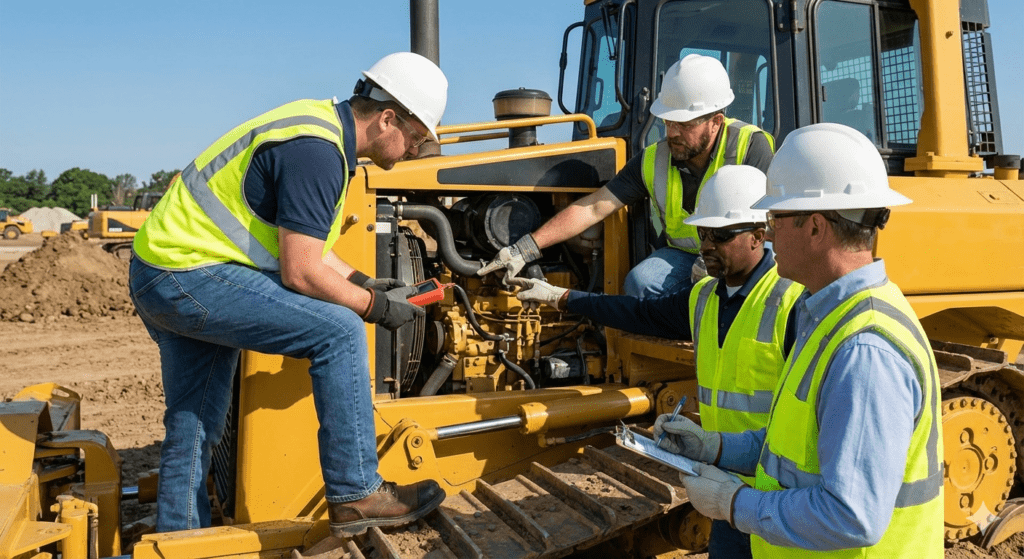
How Communication Failures Cause Breakdowns
Here’s a real-world example many sites know too well:
- Operator hears a noise but keeps quiet
- Technician is not informed
- Supervisor pushes production
- Machine fails catastrophically
Result:
- Downtime
- Expensive repairs
- Finger-pointing
Good communication stops this chain early.
Simple Practices That Prevent Major Failures
These habits make a huge difference:
1. Daily Inspections
Operators complete inspections honestly — not just ticking boxes.
2. Clear Fault Reporting
Simple descriptions:
- “Blue smoke at startup”
- “Oil pressure drops when hot”
- “Machine slow uphill”
3. Technician Feedback
Technicians explain:
- What failed
- Why it failed
- How to prevent it
4. Supervisor Follow-Up
Supervisors ensure:
- Repairs are documented
- Services are scheduled
- Repeat faults are investigated
African Working Conditions: Why Teamwork Matters More Here
In many African sites we deal with:
- Dust
- Heat
- Poor fuel quality
- Remote locations
- Limited spare parts
Because of this:
- Small faults escalate faster
- Delays cost more
- Preventive maintenance is critical
Strong teamwork compensates for harsh conditions.
Apprentice Lesson: Learn the Whole System
As an apprentice, don’t just learn engines.
Learn:
- How operators think
- How supervisors plan
- How communication prevents failure
This knowledge will:
- Make you a better technician
- Prepare you for leadership roles
- Open doors to international work
Final Thoughts: Machines Don’t Fail Alone
A diesel engine is only as reliable as the people around it.
When operators, technicians, and supervisors work together:
- Machines last longer
- Work becomes safer
- Costs go down
- Careers grow
If you want to become a respected technician — learn the machine and the people.
You can read more here.