

What Are Electronic Diagnostic Tools in Heavy Equipment?
Introduction
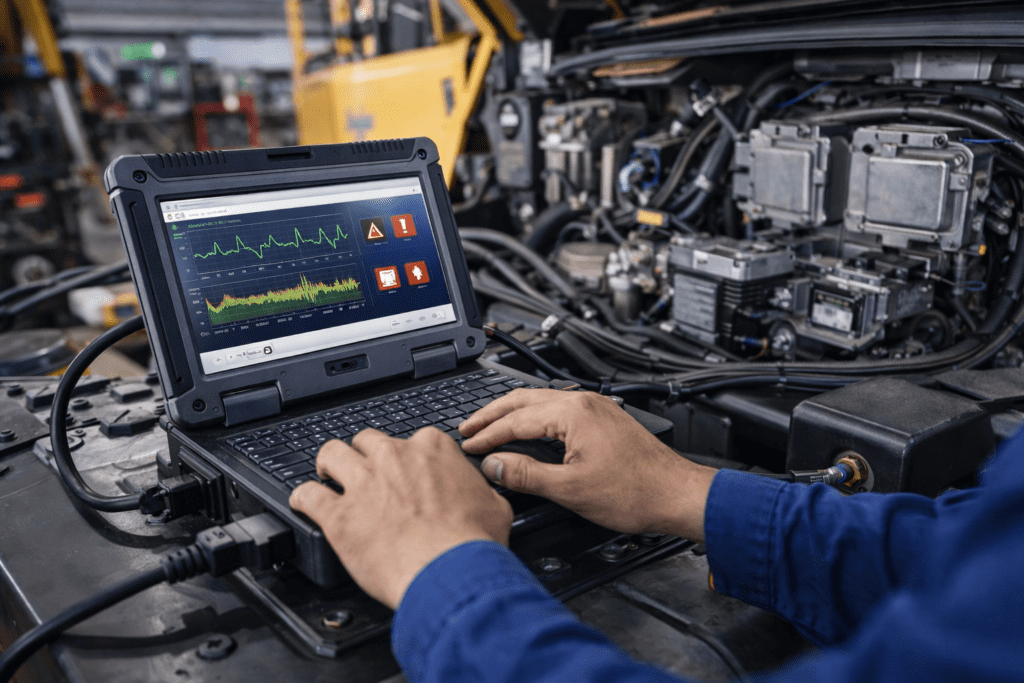
Modern heavy equipment relies heavily on electronic diagnostic tools to identify faults, protect components, and control machine performance. From engine management and emissions systems to hydraulics and safety circuits, today’s machines cannot be diagnosed accurately without electronic diagnostics.
For apprentices, diagnostic tools can feel complex and overwhelming. For experienced technicians, incorrect use of diagnostic tools can lead to misdiagnosis, unnecessary parts replacement, and wasted downtime. This article explains what electronic diagnostic tools are, how they are used in heavy equipment diagnostics, and where they fit in real workshop and field environments
What Are Electronic Diagnostic Tools?
Electronic diagnostic tools are devices and software systems used to communicate with a machine’s electronic control units (ECUs). These tools allow technicians to access information stored inside the machine’s control systems.
At their most basic level, diagnostic tools are used to:
- Read fault codes
- View live sensor data
- Monitor system status
- Identify electrical and electronic faults
At more advanced levels, some tools can:
- Perform calibrations
- Reset learned values
- Configure parameters
- Assist with guided troubleshooting
It’s important to understand that a diagnostic tool does not diagnose the fault for you. It provides information — the technician must interpret that information correctly.
Why Modern Heavy Equipment Needs Diagnostics
Modern machines use electronics to control:
- Fuel injection and engine timing
- Emissions and engine protection systems
- Hydraulic performance and safety functions
- Transmission and braking systems
- Operator monitoring and fault protection
Without electronic diagnostics, many faults are invisible. A machine may derate, shut down, or behave abnormally with no obvious mechanical failure. Diagnostics allow technicians to “see” what the machine is detecting internally.
What Diagnostic Tools Can Do (and Can’t Do)
What they CAN do:
- Show which system has detected a problem
- Provide fault codes and descriptions
- Display live data from sensors
- Help confirm or rule out suspected faults
What they CANNOT do:
- Automatically identify the root cause
- Replace electrical testing skills
- Fix wiring issues or mechanical failures
- Compensate for poor system knowledge
A common mistake is assuming that reading a fault code equals diagnosis. In reality, fault codes are the starting point, not the answer.
Types of Electronic Diagnostic Tools
There are two main categories technicians should understand:
1. OEM Diagnostic Tools
These are tools developed by the machine manufacturer. They offer deep access and are commonly used by dealerships and authorized service providers.
- Brand-specific
- Highest system access
- Often require subscriptions and training
2. Aftermarket Diagnostic Tools
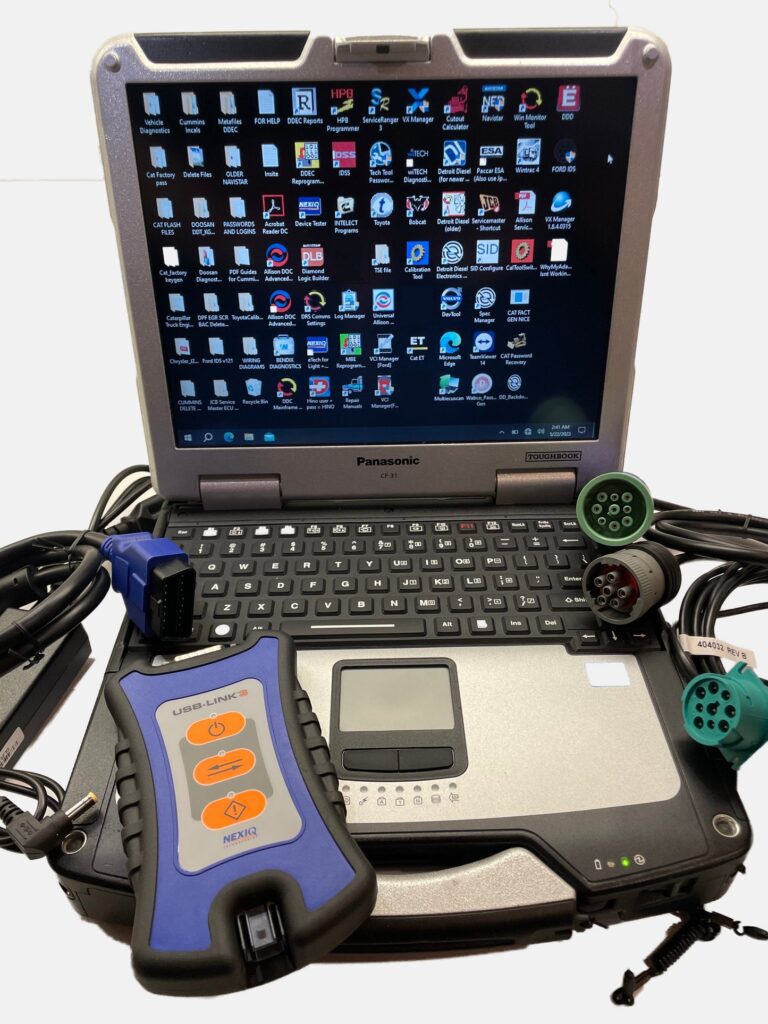
These tools are designed to work across multiple brands and are widely used in independent workshops and mixed fleets.
- Multi-brand coverage
- More flexible for field work
- Some limitations compared to OEM tools
In heavy equipment diagnostics, understanding the limitations of each diagnostic tool is critical. OEM diagnostic tools offer the deepest system access but are often restricted by subscriptions and brand limitations. Aftermarket diagnostic tools provide broader coverage across multiple machine brands but may lack full calibration or programming functions. Skilled technicians know when to rely on each type.
Where Diagnostic Tools Fit in the Repair Process
A good diagnostic process usually follows this order:
- Operator complaint and machine history
- Visual inspection and basic checks
- Electrical testing (power, grounds, continuity)
- Diagnostic tool connection
- Live data analysis and fault confirmation
- Targeted repair and verification
Diagnostic tools should support the process, not replace it.
Why Diagnostic Skills Matter More Than the Tool
Two technicians can use the same diagnostic tool and get very different results. The difference is skill, not software.
Strong diagnostic technicians understand:
- Electrical fundamentals
- Sensor behavior
- System logic
- How mechanical issues affect electronic systems
The tool amplifies knowledge — it doesn’t create it.
Who This Guide Is For
This article and the posts that follow are written for:
- Apprentices learning diagnostics for the first time
- Diesel and heavy equipment technicians
- Field service technicians
- Workshop supervisors and managers
- Tradesmen preparing for OEM or international work
Frequently Asked Questions
What are electronic diagnostic tools used for in heavy equipment?
Electronic diagnostic tools are used to communicate with a machine’s electronic control units to read fault codes, view live data, monitor system status, and assist with troubleshooting electronic and electrical faults.
Do electronic diagnostic tools fix machine faults?
No. Diagnostic tools only provide information. The technician must interpret the data, perform electrical and mechanical testing, and carry out the correct repair.
Are OEM diagnostic tools better than aftermarket tools?
OEM tools provide deeper access for specific brands, while aftermarket tools are often better suited for mixed fleets and field service. Each has advantages depending on the application.
Do apprentices need diagnostic tools?
Apprentices should learn diagnostic fundamentals first, including electrical testing and system understanding. Diagnostic tools should support learning, not replace it.
Can heavy equipment be diagnosed without electronic tools?
Basic faults can sometimes be identified mechanically, but modern heavy equipment requires electronic diagnostics for accurate fault identification and system monitoring.
What’s Next?
In the next post, we’ll break down how Electronic Control Units (ECUs) actually work and how they make decisions using sensor inputs — knowledge that every diagnostic technician needs.
👉 For a complete overview of diagnostic tools, comparisons, and selection advice, see our full guide:
Electronic Diagnostic Tools for Heavy Equipment