

Discover Major Components of Heavy Equipment and Their Functions
Introduction
Every piece of heavy equipment—whether an excavator on a construction site, a drill rig in a mine, a harvester in a forest, or a tamping machine on a railway line—relies on the same core systems working together. While machines may look very different externally, internally they share common components that convert fuel into motion, force, and controlled work.
For beginners, understanding these major components of heavy equipment removes the “mystery” around heavy machinery. For operators, mechanics, inspectors, and supervisors, it forms the foundation for safe operation, effective troubleshooting, and proper maintenance.
In this article, we break down the major components of heavy equipment, explain what each system does, and show how they interact in construction, mining, agriculture, forestry, railway, and drilling applications.
The Five Core Systems of Heavy Equipment
Almost all heavy equipment is built around five main systems:
- Power System (Diesel Engine)
- Hydraulic System
- Transmission and Drivetrain
- Electrical and Electronic Systems
- Structural and Undercarriage Components
Supporting these are auxiliary systems such as cooling, fuel delivery, lubrication, braking, and operator control systems.
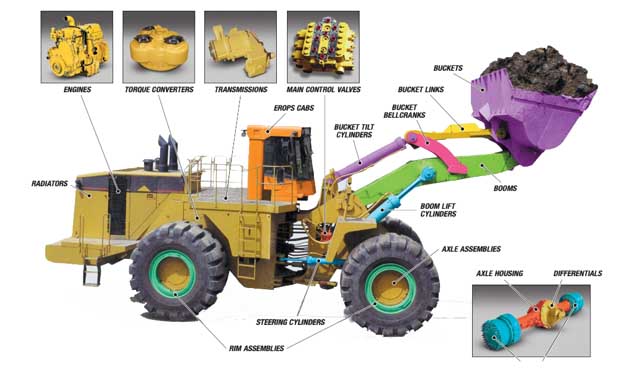
1. Diesel Engine – The Power Source
Function
The diesel engine is the heart of heavy equipment. It converts fuel into mechanical power that drives all other systems.
Heavy equipment engines are designed to:
- Produce high torque at low RPM
- Run continuously under heavy load
- Operate reliably in dust, heat, cold, and vibration
Key Engine Components
Common engine components include:
- Cylinder block and head
- Pistons, rings, and connecting rods
- Crankshaft and camshaft
- Fuel injectors and high-pressure fuel pump
- Turbocharger and intercooler
- Air intake and exhaust system
Where Engines Are Used
- Excavators: power hydraulics and swing motors
- Drill rigs: drive rotation, feed, and compressors
- Tractors: power PTO and hydraulics
- Railway machines: power tamping, lifting, and propulsion
Why Diesel Is Used
Diesel engines are preferred because they:
- Deliver strong pulling power
- Are fuel-efficient under load
- Have long service life
- Are safer than petrol due to lower volatility
2. Hydraulic System – The Muscle of the Machine
Function
Hydraulics provide the force and motion needed to lift, push, rotate, drill, and steer heavy equipment.
Hydraulic systems work on a simple principle:
Pressurized fluid transmits force
Main Hydraulic Components
- Hydraulic pump
- Control valves
- Hydraulic cylinders
- Hydraulic motors
- Hoses and steel lines
- Hydraulic oil reservoir and filters
Applications Across Equipment
- Excavators: boom, arm, bucket movement
- Drill rigs: rotary head torque and feed pressure
- Forestry harvesters: cutting heads and log handling
- Railway machines: lifting, alignment, tamping
Importance of Hydraulics
Hydraulics allow:
- Smooth, precise control
- Massive lifting force
- Compact system design
Because hydraulics operate under extreme pressure, cleanliness, proper oil, and correct maintenance are critical.
(Hydraulics will be explored deeply later.)
3. Transmission and Drivetrain – Power Delivery
Function
The transmission transfers engine power to:
- Wheels or tracks
- Hydraulic pumps
- Final drives
It allows the machine to operate at different speeds while maintaining torque.
Common Transmission Types
- Manual transmission
- Powershift transmission
- Hydrostatic transmission
- Continuously Variable Transmission (CVT)
Drivetrain Components
- Torque converter
- Gearbox
- Drive shafts
- Differentials
- Final drives
Industry Examples
- Dozers: powershift transmissions for pushing power
- Loaders: torque converters for smooth loading
- Tractors: CVT for efficient field work
- Drill rigs: transmission drives auxiliary systems
(Transmissions are covered in detail later.
4. Electrical and Electronic Systems – Control and Monitoring
Function
Modern heavy equipment relies heavily on electrical and electronic systems for:
- Engine management
- Safety systems
- Operator controls
- Diagnostics and monitoring
Electrical Components
- Battery
- Starter motor
- Alternator
- Wiring harnesses
- Fuses and relays
Electronic Components
- Electronic Control Units (ECUs)
- Sensors (pressure, temperature, speed)
- Displays and operator interfaces
- Telematics systems
Why Electronics Matter
Electronics improve:
- Fuel efficiency
- Machine performance
- Fault detection
- Preventive maintenance
A faulty sensor can stop an entire machine, making electrical knowledge essential.
(See electrical systems covered already)
5. Structural Components – Frame and Body
Function
Structural components support:
- Machine weight
- Loads and stresses
- Vibration and shock
They provide the foundation on which all systems are mounted.
Key Structural Elements
- Main frame
- Boom, arm, and attachments
- Counterweights
- Cab and operator protection structures
Safety Structures
- ROPS (Roll Over Protective Structure)
- FOPS (Falling Object Protective Structure)
These protect operators in construction, mining, forestry, and railway environments.
6. Undercarriage – Mobility and Stability
Function
The undercarriage allows the machine to:
- Move
- Support heavy loads
- Maintain stability
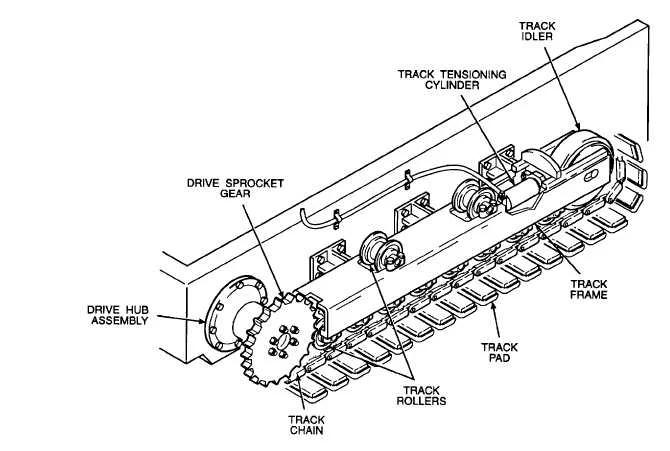
Tracked Undercarriage Components
- Tracks
- Rollers and idlers
- Sprockets
- Track frames
Used in excavators, dozers, drill rigs, and forestry machines.
Wheeled Undercarriage Components
- Axles
- Tires
- Suspension systems
- Steering components
Used in loaders, graders, trucks, and tractors.
Undercarriage wear is one of the highest operating costs, especially in mining and forestry.
7. Cooling System – Heat Management
Function
Heavy equipment generates massive heat. The cooling system prevents:
- Engine overheating
- Hydraulic oil breakdown
- Transmission failure
Main Components
- Radiator
- Cooling fan
- Water pump
- Thermostat
- Oil coolers
Poor cooling leads to catastrophic failures, making inspections critical.
8. Fuel and Lubrication Systems
Fuel System
- Fuel tank
- Fuel filters
- Injection pump
- Injectors
Clean fuel is essential for modern high-pressure systems.
Lubrication System
- Oil pump
- Oil filters
- Oil galleries
Proper lubrication prevents:
- Bearing failure
- Excessive wear
- Engine seizure
9. Operator Control Systems
Function
Operator controls allow precise and safe operation.
Includes:
- Joysticks
- Pedals
- Control levers
- Touchscreen displays
In advanced machines, controls are electronically linked to hydraulic valves and ECUs.
How All Major Components of Heavy Equipment Work Together
A simple example:
- Diesel engine produces power
- Transmission distributes power
- Hydraulic pumps convert power into force
- Electrical systems control operation
- Structure and undercarriage support loads
If one system fails, the entire machine is affected.
Why Understanding Major Components of Heavy Equipment Matters
Understanding components helps you:
- Operate machines correctly
- Detect problems early
- Communicate with technicians and OEMs
- Reduce downtime
- Extend equipment life
This knowledge is essential for:
- Operators
- Mechanics
- Inspectors
- Supervisors
- Fleet managers
Conclusion
Heavy equipment may look complex, but it is built around a set of well-defined systems that work together to perform demanding tasks. By understanding engines, hydraulics, transmissions, electrical systems, and structural components, you gain the foundation needed to operate, maintain, and troubleshoot machinery across construction, mining, agriculture, forestry, railway, and drilling industries. Major components of heavy equipment create a system that works together.
In the next article, we move from theory to practice by focusing on safety fundamentals for heavy equipment operators.