Monday to Saturday - 8:00 -17:30

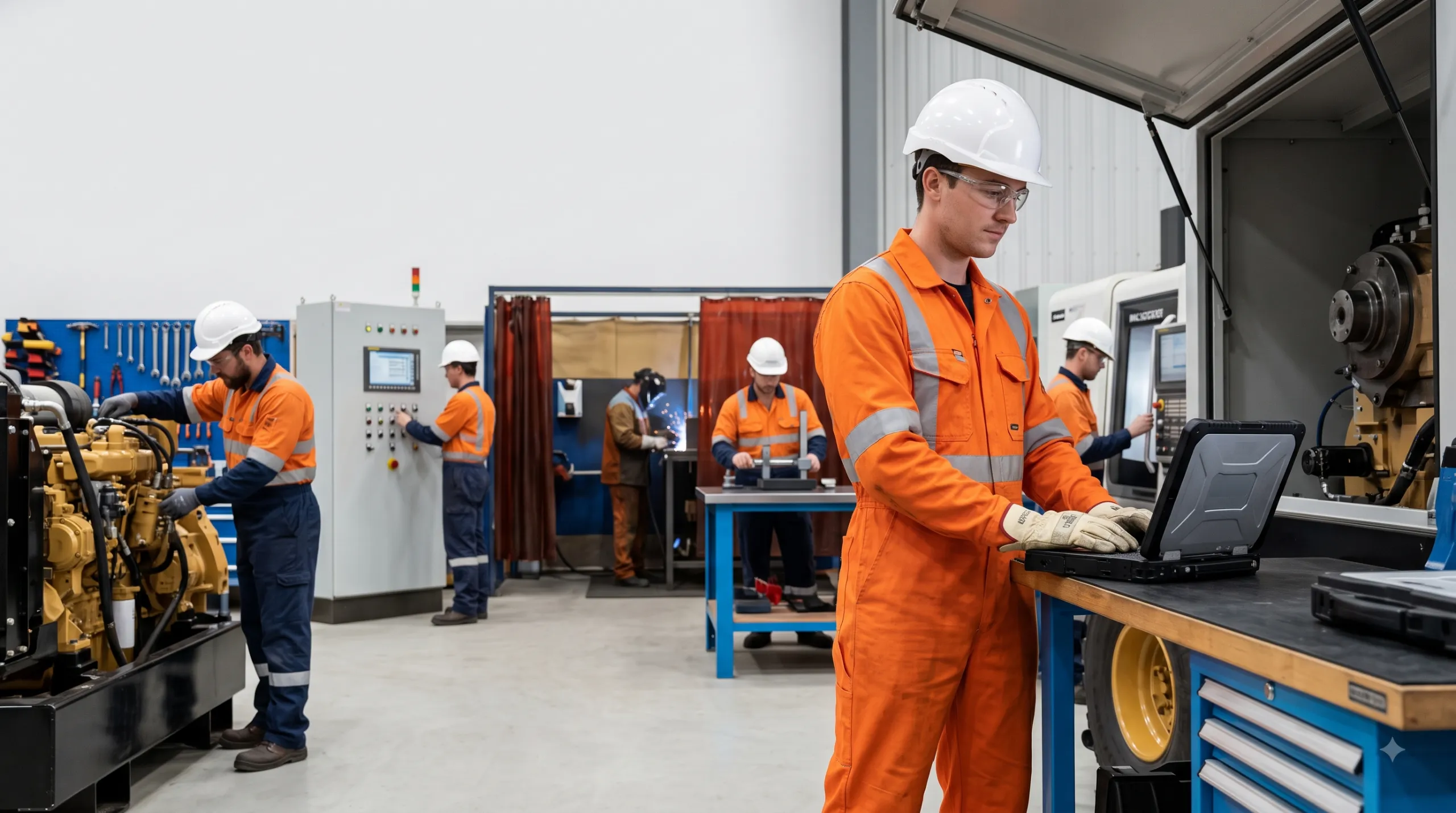
Many young people assume that a strong professional career must begin with university. When exploring future options, students are often steered toward traditional academic degrees while overlooking alternative paths. However, many Technical Careers Without a Degree can offer strong professional development, meaningful earning potential and intellectually demanding work.
These careers do not require a university degree at entry, but they still demand technical knowledge, structured learning, discipline, and practical competence. This guide explores the diverse pathways available to those who prefer hands-on problem-solving over traditional classroom study.
What Does “Without a Degree” Really Mean?
There is a frequent misunderstanding that choosing not to attend university means opting out of education entirely. It is vital to separate university education from other forms of professional development.
- University Education: Focuses heavily on academic theory, research, and high-level conceptual analysis delivered through degree programs.
- Vocational Education & Apprenticeships: Focuses on applying technical theory directly to physical systems through structured workplace training, technical instruction, and competency assessment.
- Certification & Licensing: Certifications may demonstrate that a person has met a particular training or competency standard, while licences provide legal authorization to perform regulated work where required. Exact requirements vary by occupation and jurisdiction.
A person can be highly educated technically without having followed the traditional university route. “A technical career is not a shortcut around education. It is a different form of professional education built through apprenticeship, workplace experience, technical training and continuous learning.”
Chief Engineer’s Career Lesson: A Different Route, Not a Lesser One
When the Chief Engineer of Modern Trade Skills was doing Advanced Level studies in high school, he wanted to become an accountant. His plan was to do articles with a chartered accountancy firm, study accountancy, and eventually complete an accountancy degree.
When he first heard about apprenticeship training, he assumed that it might mean choosing a low-paying path instead of a professional career. Good career guidance changed that perception, and he chose the apprenticeship route.
Some of his friends continued along the accountancy path and completed articles with chartered accountancy firms. As his own technical career developed, he discovered that his original assumption had been wrong. In his personal experience, his technical career eventually allowed him to earn as much as, and at times more than, some friends who had chosen the accountancy route.
The lesson here is not that trades always pay more than accounting. The lesson is that a technical career is a different professional route, not automatically a lesser one. A skilled technical career can become financially rewarding, intellectually demanding, internationally relevant, and personally satisfying without requiring a traditional university degree at the beginning.
The mistake is assuming that ‘no degree’ means ‘low value.’ The better question is: What level of skill, competence, and responsibility can this career develop over time?
Top Technical Careers Without a Degree
Entering Technical Careers Without a Degree opens doors across heavy industry, manufacturing, energy, and infrastructure. Below are eleven prominent technical careers, what they involve, and how professionals progress within them.
CAREER 1 — Heavy Equipment Mechanic
- What they do: Maintain, diagnose, and overhaul massive mining and construction assets, including haul trucks, hydraulic excavators, track drills, and wheel loaders. They troubleshoot complex electro-hydraulic systems, high-pressure common rail diesel engines, and heavy powertrains.
- Work environments: Surface mines, underground operations, heavy civil construction sites, and specialized equipment dealer workshops.
- Common entry routes: Structured trade apprenticeships or vocational mechanical training programs.
- Important skills: Systems thinking, hydraulic schematic interpretation, digital multimeter testing, mechanical aptitude, and heavy rigging.
- Training or licensing: Training requirements vary by country and employer and may include a trade apprenticeship or vocational qualification, employer competency training, site authorizations and specialist OEM training.
- Progression: Field Service Technician, Senior Diagnostic Specialist, Maintenance Supervisor, Reliability Technician or Reliability Specialist, with engineering roles generally requiring additional qualifications where applicable.
- Realities/Disadvantages: Physically demanding work, harsh environmental conditions, shift work, and remote site locations.
CAREER 2 — Diesel Mechanic
- What they do: Service, repair, and diagnose heavy diesel engines, fuel injection systems, cooling circuits, lubrication networks, and ancillary power generation units across commercial transport and industrial sectors.
- Work environments: Fleet maintenance workshops, transport depots, power generation facilities, and mobile service vehicles.
- Common entry routes: Vocational training or mechanical apprenticeships.
- Important skills: Fuel system diagnostics, engine timing, emissions control system troubleshooting, and electronic service tool navigation.
- Training or licensing: Trade qualification; specific jurisdictions may require commercial vehicle inspection credentials.
- Progression: Master Diesel Technician, Fleet Maintenance Supervisor, Technical Trainer.
- Realities/Disadvantages: Heavy lifting, exposure to greases and oils, and tight turnaround deadlines.
CAREER 3 — Industrial Electrician
- What they do: Install, maintain, test, and repair industrial electrical motors, high-voltage and low-voltage power distribution networks, automated control panels, and complex wiring systems.
- Work environments: Manufacturing plants, processing facilities, underground mines, and automated distribution centers.
- Common entry routes: Electrical trade apprenticeships combined with technical college instruction.
- Important skills: Circuit schematic reading, PLC logic understanding, electrical safety procedures appropriate to the voltage and work scope, and DMM parametric testing.
- Training or licensing: Electrical licensing, registration and scope-of-work requirements vary significantly by jurisdiction. Regulated electrical work must only be performed by people who hold the required authorization for that location and task.
- Progression: Automation Specialist, Electrical Supervisor, Electrical Engineer (via further study).
- Realities/Disadvantages: Severe electrical arc-flash hazards, strict regulatory compliance demands, and fault-finding under time pressure.
CAREER 4 — Mechanical Fitter / Industrial Fitter
- What they do: Assemble, align, maintain, and repair heavy industrial machinery components, including industrial pumps, large gearboxes, drive shafts, conveyor pulleys, and rotating assemblies.
- Work environments: Mineral processing plants, pulp and paper mills, power stations, and heavy manufacturing factories.
- Common entry routes: Mechanical fitting apprenticeships.
- Important skills: Precision measurement (micrometers, dial indicators), laser alignment, bearing fitting, blueprint reading, and dynamic balancing.
- Training or licensing: Entry commonly involves apprenticeship or vocational mechanical-fitting training, but qualification titles and requirements vary by country.
- Progression: Senior Plant Fitter, Shutdown Planner, Reliability Technician.
- Realities/Disadvantages: Working in tight spaces, heavy manual handling, and executing maintenance during high-pressure plant shutdowns.
CAREER 5 — Welder
- What they do: Join, fabricate, and repair structural steel, heavy plate, pressure vessels, and specialized metal components using various welding processes (SMAW, GMAW, GTAW, FCAW).
- Work environments: Fabrication shops, structural construction sites, mining repair facilities, and shipyards.
- Common entry routes: Vocational welding courses or fabrication apprenticeships.
- Important skills: Blueprint interpretation, metal preparation, weld pool control, distortion management, and visual/destructive weld inspection.
- Training or licensing: Advanced welding requires specific structural or pressure-vessel certifications depending on process, material, industry, and jurisdiction.
- Progression: Certified Pressure Welder, Welding Inspector, Quality Control (QC) Coordinator.
- Realities/Disadvantages: Exposure to UV radiation, toxic welding fumes, heat, and static physical postures.
CAREER 6 — Boilermaker
- What they do: Lay out, cut, shape, and assemble heavy metal plate, structural steel sections, and pressure vessels for mining equipment, industrial plant structures, and materials handling systems. Avoid confusing boilermaking with domestic boiler servicing.
- Work environments: Heavy fabrication workshops, structural assembly yards, and major mining maintenance shutdowns.
- Common entry routes: Boilermaking or structural-fabrication apprenticeship and vocational pathways are common, although qualification names vary by country.
- Important skills: Geometric development, thermal cutting (plasma/oxy-fuel), plate rolling, heavy lifting rigging, and welding integration.
- Training or licensing: Trade qualification in structural plating and fabrication.
- Progression: Workshop Foreman, Structural Supervisor, Project Manager.
- Realities/Disadvantages: Extreme noise levels, heavy physical labor, and working at heights or inside confined spaces.
CAREER 7 — Automotive Technician
- What they do: Maintain, service, and diagnose modern motor vehicles, light commercial trucks, and hybrid/electric passenger platforms. They interface extensively with vehicle computers, sensors, and electronic management modules.
- Work environments: Dealership service centers, independent mechanical workshops, and specialized tuning facilities.
- Common entry routes: Automotive apprenticeship or vocational certification programs.
- Important skills: Oscilloscope waveform analysis, computer network diagnostics (CAN bus), emissions testing, and brake/suspension overhaul.
- Training or licensing: Automotive service qualification; regional safety inspection licensing where applicable.
- Progression: Master Technician, Diagnostic Specialist, Service Manager.
- Realities/Disadvantages: Rapidly changing technology requiring constant upskilling, and dealing with software update complexities.
CAREER 8 — HVAC / Refrigeration Technician
- What they do: Install, maintain, test, and repair commercial and industrial cooling systems, large-scale air conditioning networks, and climate control units used in buildings, heavy equipment cabins, and server rooms.
- Work environments: Commercial facilities, mining camp infrastructure, industrial processing plants, and mobile equipment maintenance shops.
- Common entry routes: Refrigeration and air conditioning trade apprenticeships.
- Important skills: Refrigerant handling, thermodynamic cycle analysis, electrical control troubleshooting, and brazing.
- Training or licensing: Refrigerant handling and HVAC work may be subject to environmental certification, licensing or registration requirements depending on the jurisdiction.
- Progression: Senior HVAC Specialist, System Designer, Facility Maintenance Manager.
- Realities/Disadvantages: Exposure to hazardous chemicals (refrigerants), working in cramped duct spaces, and on-call emergency breakdown rosters.
CAREER 9 — Instrumentation Technician
- What they do: Calibrate, maintain, and troubleshoot industrial process control instruments, electronic sensors, programmable logic controllers (PLCs), flow meters, pressure transmitters, and automated valve actuators.
- Work environments: Oil and gas refineries, chemical plants, water treatment facilities, and automated mineral processing plants.
- Common entry routes: Specialized vocational training, electrical/instrumentation dual-trade apprenticeships, or technical diplomas.
- Important skills: Loop calibration, loop tuning, schematic reading, understanding 4-20mA control signals, and digital communication protocols (HART, Fieldbus).
- Training or licensing: Trade or technician qualification; specific industrial sites require safety and electrical validation.
- Progression: Senior Automation Engineer (via further study), Control Systems Specialist, Instrument Supervisor.
- Realities/Disadvantages: High-consequence precision work where a calibration error can shut down an entire plant process.
CAREER 10 — CNC Machinist / Machine Tool Technician
- What they do: Program, set up, and operate Computer Numerical Control (CNC) machine tools (mills, lathes, borers) to manufacture precision metal or composite parts to tight engineering tolerances.
- Work environments: Precision machine shops, manufacturing plants, and heavy equipment component overhaul facilities.
- Common entry routes: Machining apprenticeships or precision manufacturing vocational courses.
- Important skills: G-code programming, reading complex engineering drawings, dimensional measurement using micrometers and coordinate measuring machines (CMM), and tool selection.
- Training or licensing: Trade qualification in machining and toolmaking.
- Progression: Senior Toolmaker, CNC Programmer, Production Supervisor, Quality Assurance Manager.
- Realities/Disadvantages: High concentration required, standing for long periods, and working with heavy rotating machinery.
CAREER 11 — Heavy Equipment / Plant Operator
- What they do: Safely operate heavy earthmoving, mining, and construction machinery—such as large haul trucks, bulldozers, graders, and rope shovels—to move material efficiently while conducting routine pre-start inspections.
- Work environments: Open-pit mines, civil earthworks projects, quarries, and major infrastructure sites.
- Common entry routes: Site-based training programs, internal progression from labourer roles, or vocational operator training certificates.
- Important skills: Spatial awareness, defensive machine operation, grade control system monitoring, situational awareness, and pre-start defect reporting.
- Training or licensing: Employers and jurisdictions may require formal training, competency verification, licences, tickets or site authorization before a person operates particular types of heavy equipment.
- Progression: Master Operator, Production Supervisor, Training Instructor, Pit Boss.
- Realities/Disadvantages: Repetitive seating postures, isolation during long shifts, and vibration exposure.
Which Technical Career Is Right for You?
Choosing among these options requires an honest appraisal of your personal strengths and preferences. Use this framework to evaluate your fit:
- Mechanical vs. Electrical: Do you prefer wrenching on greasy gearboxes, diesel engines, and hydraulic rams, or do you prefer tracing electrical schematics, control wiring, and sensor loops?
- Environment: Do you thrive outdoors on rugged mine sites, inside temperature-controlled manufacturing plants, or traveling across various customer facilities as a field service technician?
- Physical Demands & Safety: Are you comfortable with heavy lifting, working at heights, working in confined spaces, and adhering strictly to heavy industrial safety protocols?
- Problem-Solving Style: Do you enjoy diagnosing complex logical faults, or do you prefer precision fabrication and creating physical components from raw materials?
Apprenticeships: One of the Strongest Entry Routes
For many Technical Careers Without a Degree, formal apprenticeships are one of the strongest entry routes for many skilled technical occupations.
Apprenticeships combine paid workplace learning with structured technical education, mentorship, and competency development. As explored in our companion guide, [How Trade Apprenticeships Work: A Step-By-Step Guide], this structure bridges the gap between raw enthusiasm and professional capability. Earning while learning can reduce some of the financial pressure associated with building occupational skills.
Many Technical Careers Without a Degree use apprenticeships as a structured entry route that combines learning with supervised workplace experience.
Can Technical Careers Lead to International Work?
Many underlying mechanical, electrical and physical principles transfer across industries and countries, but standards, regulations, equipment configurations and licensing requirements can differ significantly.
Overseas employment depends heavily on local visas, mandatory trade licensing, employer sponsorship, qualification recognition frameworks, language proficiency, and shifting labor-market demands. As demonstrated by the Chief Engineer’s career path, a completed trade and dedication to professional growth can open doors globally. Overseas work is never guaranteed, but strong technical capability can remain valuable across different industries and locations.
Degree vs Trade Qualification: Different Professional Routes
It is essential to maintain a balanced perspective. University education and trade qualifications are not competing enemies; they are simply different professional routes.
University suits careers requiring deep academic research, theoretical design, and formal scientific study. Trade and vocational pathways suit occupations where competence is built through technical education and supervised practical experience.
Both pathways can lead to respected careers, specialization, leadership, further education, and professional growth. The correct choice depends entirely on your career goals, learning style, target occupation, and individual interests.
Success in Technical Careers Without a Degree depends less on avoiding education and more on building real competence through training, experience and continuous learning.
What Employers Really Value in Technical Careers
Certificates can establish eligibility, but employers ultimately depend on demonstrated capability. The traits most highly valued on the workshop floor include:
- Absolute commitment to safety and isolation protocols.
- Reliability and personal ownership of machinery.
- True diagnostic ability rather than blind parts-changing.
- High-quality workmanship and disciplined cleanliness.
- Accurate documentation and communication.
- A continuous willingness to learn and adapt.
At Modern Trade Skills, our core mission remains: “Developing Diagnostic Leaders, Not Parts Changers.” Long-term professional value comes from becoming someone who can think through complex problems, test hypotheses empirically, and make sound engineering decisions.
Common Mistakes When Choosing a Technical Career
When exploring these pathways, avoid these common pitfalls:
- Choosing a trade purely based on short-term starting salaries.
- Assuming all trades involve identical working conditions or physical demands.
- Stopping your education the day you receive your qualification certificate.
- Chasing certificates and paper credentials without developing actual physical competence.
- Ignoring local legal licensing requirements for regulated work.
- Assuming international employment is automatically guaranteed by holding a trade paper.
- Choosing a career path simply because peers or family members suggested it without matching your personal aptitudes.
Frequently Asked Questions About Technical Careers Without a Degree
1. Can I build a good career without a university degree? Yes. Many individuals build highly respected, intellectually stimulating, and financially rewarding careers through vocational training, apprenticeships, and hands-on technical specialization.
2. What are some examples of Technical Careers Without a Degree? Examples include heavy equipment mechanics, industrial electricians, mechanical fitters, welders, boilermakers, automotive technicians, HVAC technicians, instrumentation technicians and CNC machinists.
3. Do I still need qualifications if I do not have a degree? Yes. Many technical careers still require some combination of vocational education, apprenticeship training, competency assessment, certificates, safety credentials or licensing, depending on the occupation and jurisdiction.
4. Which technical career is best for someone who likes machines? If you enjoy diesel engines, hydraulics and large machinery, heavy equipment maintenance may suit you. If you prefer precision assemblies and rotating machinery, mechanical fitting may be worth exploring.
5. Can technical careers pay well? Technical careers can become financially rewarding, but earnings vary significantly by occupation, country, industry, experience, specialization, and employer.
6. Can I work overseas with a trade qualification? A strong trade qualification and relevant experience can support international career opportunities, but overseas work depends on visas, employer demand, qualification recognition and licensing requirements.
7. Can I study for a degree later in life? Yes. Some technicians later pursue university study in areas such as engineering, management or safety, subject to the admission requirements of the institution and program.
8. Are technical careers difficult? They can be physically demanding, require long hours in challenging environments, and demand continuous mental effort to master complex diagnostics and evolving technologies.
Final Message: Skill Has Value
Pursuing Technical Careers Without a Degree does not mean the absence of professional value. Real value comes from competence, technical knowledge, experience, safety, judgement, responsibility, and continuous learning.
Reflecting on the Chief Engineer’s journey from a high school student considering accounting to an international technical specialist shows that a non-degree route can be demanding, respected, and deeply rewarding. The goal is not simply employment; the goal is to develop lifelong professional capability.
The strongest Technical Careers Without a Degree are built on skill, responsibility, technical judgement and continued professional development.
References / Further Reading
- U.S. Department of Labor / Apprenticeship.gov: Official United States resource outlining the Registered Apprenticeship system, validating paid workplace learning, structured on-the-job training, mentoring, and related technical instruction. (Available at: https://www.apprenticeship.gov/employers/explore-apprenticeship)
- UK Government / Apprenticeships: Official United Kingdom apprenticeship authority outlining standards for formal apprenticeship employment, off-the-job learning requirements, and structured workplace development. (Available at: https://www.apprenticeships.gov.uk/apprentices/what-is-an-apprenticeship)
- Australian Government / Department of Employment and Workplace Relations: Official authority for Australian Apprenticeships demonstrating how vocational training structures combine paid employment with structured training for nationally recognised qualifications. (Available at: https://www.australianapprenticeships.gov.au/about-australian-apprenticeships)
- National Careers Service (UK): Official occupational guidance detailing technical job profiles, required vocational qualifications, and progression frameworks across engineering and trades. (Available at: https://nationalcareers.service.gov.uk/explore-careers)
Modern Trade Skills Institutional Reference
- Modern Trade Skills Handbook Version 1.0 – Institutional reference defining the Diagnostic Leader philosophy, educational frameworks, and technical technician-development principles.