

Diesel engines are strong and reliable.
But like any machine, they develop problems over time.
As an apprentice diesel mechanic, your job is not to guess.
Your job is to observe, listen, and diagnose before changing parts.
This article explains the most common diesel engine problems, what causes them, and what you should check first in the workshop.
Why Diesel Engines Develop Problems
Diesel engines work hard.
They:
- Run long hours
- Carry heavy loads
- Operate in heat, dust, and poor fuel conditions
In Africa, engines often face:
- Dirty air filters
- High ambient temperatures
- Variable diesel quality
- Delayed servicing
Over time, these conditions cause wear and failure.
Hard Starting
What the Operator Notices
- Engine cranks but does not start
- Long cranking time, especially in the morning
- White smoke during cranking
Common Causes
- Weak battery or poor connections
- Faulty glow plugs (small engines)
- Low fuel pressure
- Air in the fuel system
- Poor compression due to worn rings or valves
What to Check First
- Battery condition and terminals
- Fuel supply and fuel filters
- Check for air leaks in fuel lines
👉 Do not jump to injectors first
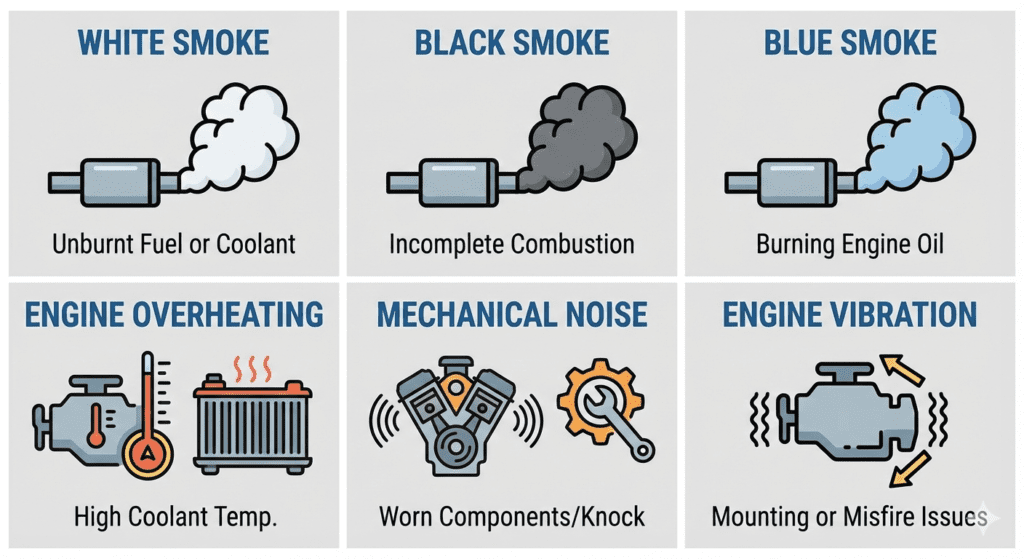
White Smoke
What the Operator Notices
- White smoke during cold start
- Rough running
- Smoke clears as engine warms
Common Causes
- Unburnt fuel
- Low compression
- Faulty injector spray pattern
- Incorrect injection timing
- Cold engine conditions
What to Check First
- Engine temperature
- Injector condition
- Compression test if smoke continues
Black Smoke
What the Operator Notices
- Thick black smoke under load
- High fuel consumption
- Loss of power
Common Causes
- Restricted air intake
- Dirty air filter
- Over-fuelling
- Faulty turbocharger
- Blocked intercooler
What to Check First
- Air filter condition
- Intake hoses
- Turbo boost pressure
👉 Black smoke means too much fuel or not enough air
Blue Smoke
What the Operator Notices
- Blue or bluish-grey smoke
- Oil consumption
- Oily smell from exhaust
Common Causes
- Worn piston rings
- Worn valve seals
- Turbocharger oil seal failure
- High engine oil level
What to Check First
- Engine oil level
- Breather system
- Signs of oil in intake piping
⚠ Blue smoke means engine oil is burning
Loss of Power
What the Operator Notices
- Engine struggles under load
- Machine feels weak
- Poor acceleration
Common Causes
- Fuel restriction
- Dirty fuel filters
- Turbocharger problems
- Exhaust restriction
- Sensor faults (electronic engines)
What to Check First
- Fuel filters
- Air system
- Fault codes (if applicable)
Engine Overheating
What the Operator Notices
- Temperature gauge rising
- Coolant boiling
- Engine derating or shutdown
Common Causes
- Low coolant level
- Blocked radiator
- Faulty thermostat
- Failed water pump
- Cooling fan not working
What to Check First
- Coolant level
- Radiator cleanliness
- Fan operation
⚠ Never open a hot radiator cap
Mechanical Noises
Common Noises You May Hear
- Knocking
- Tapping
- Rattling
- Grinding
Common Causes
- Worn bearings
- Incorrect injector timing
- Loose components
- Valve train wear
What to Check First
- Oil level and oil pressure
- Listen with a mechanic’s stethoscope
- Compare noise under load and idle
👉 Noise is information — listen carefully
Excessive Vibration
What the Operator Notices
- Shaking at idle
- Rough running
- Loose components
Common Causes
- Engine misfire
- Faulty injector
- Engine mount failure
- Crankshaft imbalance
What to Check First
- Injector balance
- Engine mounts
- Misfire diagnostics
Safety Notes for Apprentices
- Always lock out and tag out before working
- Do not run engines in closed spaces
- Wear hearing and eye protection
- Keep clear of rotating parts
Key Lesson for Apprentices
Do not replace parts blindly.
Always:
- Observe the problem
- Identify symptoms
- Check simple things first
- Diagnose logically
This is how good technicians are built.
Final Summary
Diesel engine problems usually give clear signs:
- Smoke
- Noise
- Vibration
- Heat
- Power loss
Your job is to understand what the engine is telling you.
Learn the basics.
Work safely.
And always think before turning spanners.
👉 Follow ModernTradeSkills for real-world diesel training built from experience.
You can read more about Diesel Engine Problems here.
If you’re diagnosing an engine in the workshop, read common diesel engine problems and what they mean