

Diesel Engine Daily Checks – Preventive Maintenance Saves Engines
If you want to become a respected diesel technician, learn this early:
Most engine failures don’t happen suddenly.
They happen because daily checks were ignored.
After more than 30 years working on diesel engines—from heavy equipment on mine sites to generators in remote African locations—I can tell you this without hesitation:
Diesel Engine Daily Checks save engines, money, and careers.
This article explains diesel engine daily checks, the preventive maintenance every apprentice must master, and why discipline in the basics separates good technicians from expensive ones.
What Are Diesel Engines Daily Checks-Preventive Maintenance?
Preventive maintenance (PM) is the habit of finding small problems before they become big failures.
In diesel engines, PM means:
- Checking fluids
- Inspecting systems
- Listening for changes
- Acting early
It is far cheaper to replace a hose, filter, or seal than to rebuild an engine.
A technician who practices preventive maintenance keeps machines running and earns trust on any site.
Why Diesel Engine Daily Checks Are Critical
Diesel engines work hard. They:
- Run for long hours
- Carry heavy loads
- Operate in heat and dust
- Often work far from workshops
Daily checks allow you to:
- Detect leaks early
- Prevent overheating
- Avoid oil starvation
- Catch contamination before damage occurs
In African conditions, daily inspections are not optional—they are survival skills.
Daily Diesel Engine Preventive Maintenance Checklist
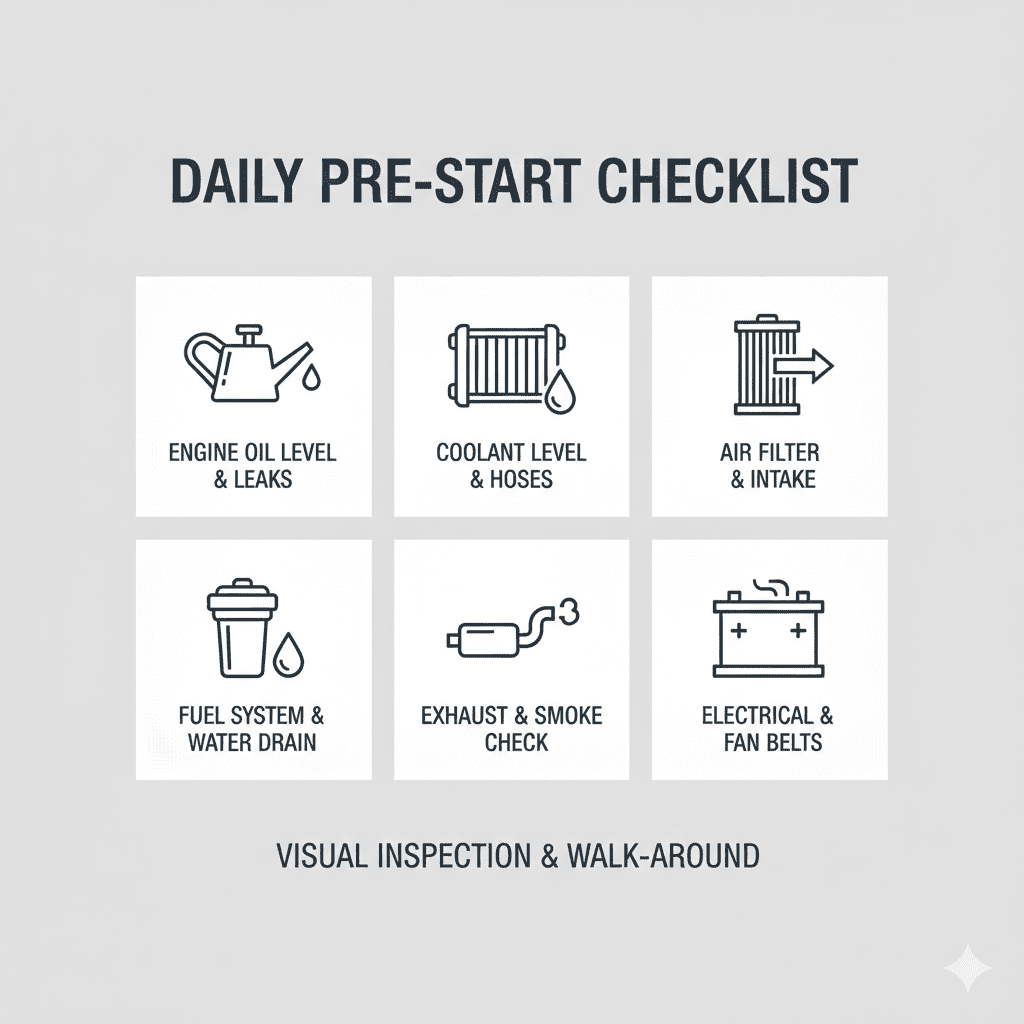
Below is a simple daily inspection routine every apprentice should follow.
Engine Oil Checks
Oil protects the engine from wear and heat.
Check:
- Oil level using the dipstick
- Oil color and thickness
- Smell for diesel fuel contamination
- Milky color (coolant contamination)
Tip: Always check oil before starting the engine or after shutdown and settling time.
Cooling System Checks
Overheating kills engines fast.
Inspect:
- Coolant level in radiator or expansion tank
- Hoses for cracks or swelling
- Radiator for mud, dust, or blockage
- Fan operation and belts or hydraulic fan system
Never open a hot radiator—serious burns happen this way.
Air Intake System Checks
Clean air is critical for diesel engines.
Check:
- Air filter restriction indicator
- Intake hoses for cracks or loose clamps
- Dust leaks around filter housing
- Pre-cleaner condition (if fitted)
Dust entering the engine creates internal wear that no oil can fix.
Fuel System Checks
Dirty fuel destroys injectors.
Inspect:
- Water separator and drain water daily if needed
- Fuel lines for leaks
- Fuel filters for signs of blockage
- Smell oil for diesel fuel dilution
Poor fuel quality is common—your inspection is the first defense.
Exhaust System Checks
The exhaust tells you how the engine is running.
Watch for:
- Blue smoke (oil burning)
- Black smoke (over-fueling or air restriction)
- White smoke (cold start or injector issues)
- Unusual exhaust noises or vibrations
- Loose clamps or cracked pipes
Smoke is a message—learn to read it.
🔌 Electrical System Checks (Often Overlooked but Critical)
Modern diesel engines rely heavily on electrical systems. Even older mechanical engines need electricity to start, charge, and protect components.
Many breakdowns blamed on “engine problems” are actually electrical faults.
As part of daily diesel engine preventive maintenance, always inspect the electrical system.
Battery Checks
The battery is the foundation of the electrical system.
Check:
- Battery terminals for looseness or corrosion
- Battery cables for damage or rubbing
- Battery hold-downs (loose batteries fail early)
- Electrolyte level (if applicable)
Instructor Tip:
A weak battery causes hard starting, poor cranking speed, and false fault codes on electronic engines.
Charging System Checks
Once the engine is running, the charging system must support all electrical loads.
Inspect:
- Alternator mounting and wiring
- Drive belts or coupling condition
- Warning lights on the dash
- Unusual noises from the alternator
Low charging voltage can cause:
- ECU faults
- Sensor failures
- Injector control problems
Wiring and Harness Checks
Diesel engines vibrate constantly. Wires suffer.
Look for:
- Loose connectors
- Chafed or exposed wires
- Oil-soaked harnesses
- Wiring rubbing against metal edges
Dust, heat, and vibration are common causes of electrical failure in African conditions.
Sensors and Warning Systems (Visual Check Only)
Even without scan tools, you can:
- Check that sensors are physically secure
- Inspect connectors for dirt or moisture
- Confirm warning lights illuminate at key-on
Never ignore warning lamps — they are part of preventive maintenance.
⚡ Why Electrical Checks Belong in Preventive Maintenance
Electrical problems can:
- Prevent starting
- Cause false shutdowns
- Damage injectors and ECUs
- Lead to unnecessary mechanical repairs
A technician who understands basic electrical inspection saves time, money, and embarrassment.
“In future posts, we will break down diesel engine electrical systems, sensors, and basic diagnostics in detail.”
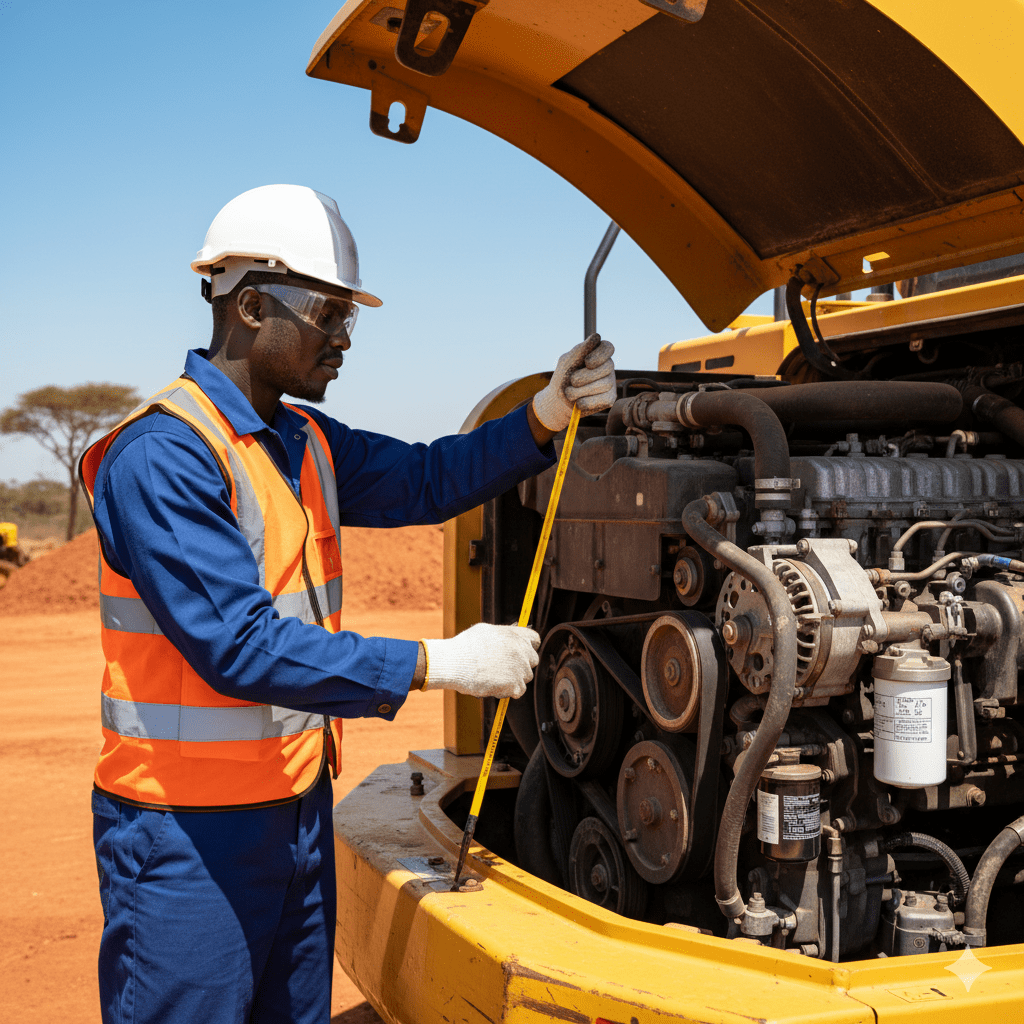
Common Mistakes Apprentices Make During Daily Checks
Many failures start with these errors:
- Rushing inspections
- Trusting warning lights only
- Ignoring small leaks
- Checking oil incorrectly
- Assuming “it ran fine yesterday”
Good technicians verify, they don’t assume.
African Working Conditions – Why Preventive Maintenance Matters More
African sites present unique challenges:
- High ambient temperatures
- Extreme dust
- Long operating hours
- Remote locations
- Limited breakdown support
Skipping maintenance to “save time” usually leads to:
- Extended downtime
- Expensive repairs
- Unsafe working conditions
A simple truth:
Maintenance is cheaper than breakdowns.
Apprentice Safety Notes
Always remember:
- Lock out and tag out before working
- Wear proper PPE
- Be careful of hot surfaces
- Dispose of oil and filters correctly
- Never work under a running machine
Safety is part of professionalism.
Summary – Discipline Builds Great Technicians
Diesel engine preventive maintenance is not complicated—but it requires discipline.
Daily checks:
- Protect the engine
- Protect the operator
- Protect your reputation
Every master technician started with basic inspections.
Take pride in the fundamentals.
Respect the machine, and it will serve you well.
Continue Learning
Explore more practical training:
You can read more about Diesel engine daily checks from Cummins.