

How Diesel Engine Exhaust Systems Work – Explained Simply
When a diesel engine burns fuel, it creates exhaust gases.
The exhaust system’s job is to safely remove these gases, reduce noise, manage heat, and—on modern engines—control emissions.
For apprentice diesel mechanics and heavy equipment technicians, understanding the exhaust system is critical for power, fuel efficiency, and safety.
What Is a Diesel Engine Exhaust System?
The exhaust system carries burned gases:
- Out of the engine
- Away from the operator
- Through noise and emission control components
If exhaust flow is restricted, the engine will:
- Lose power
- Overheat
- Smoke
- Consume more fuel
Basic Exhaust Flow in a Diesel Engine
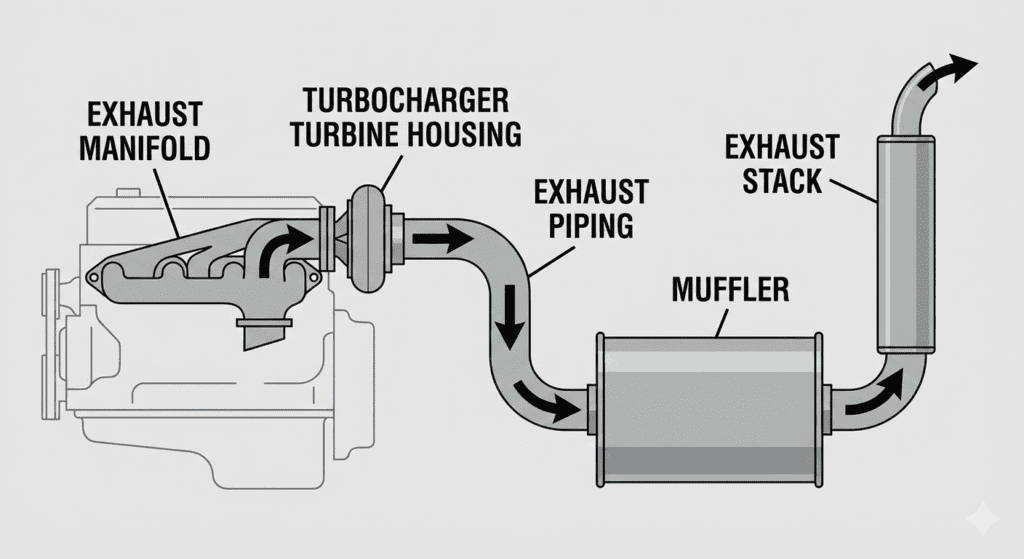
The exhaust gases follow this path:
- Cylinder head
- Exhaust manifold
- Turbocharger (if fitted)
- Exhaust piping
- Muffler or silencer
- Aftertreatment system (modern engines)
- Exhaust outlet
Each component has a specific job.
Exhaust Manifold – The Starting Point
The exhaust manifold:
- Bolts directly to the cylinder head
- Collects exhaust gases from each cylinder
- Directs them into one outlet
Common Problems
- Cracks due to heat
- Leaking gaskets
- Loose mounting bolts
Workshop tip:
A ticking noise during startup often points to an exhaust manifold leak.
Turbocharger and the Exhaust Side
On turbocharged engines:
- Exhaust gases spin the turbine wheel
- This powers the compressor on the intake side
A restricted exhaust before or after the turbo reduces boost pressure.
Apprentice Warning
Never run an engine with a disconnected exhaust near people.
Exhaust gases are hot and toxic.
Exhaust Piping and Muffler
The exhaust pipe:
- Routes gases away from the engine
- Reduces heat near sensitive components
The muffler:
- Reduces engine noise
- Does NOT restrict flow when healthy
Common Issues
- Rusted pipes
- Loose clamps
- Collapsed internal baffles
Modern Diesel Aftertreatment Systems (Explained Simply)
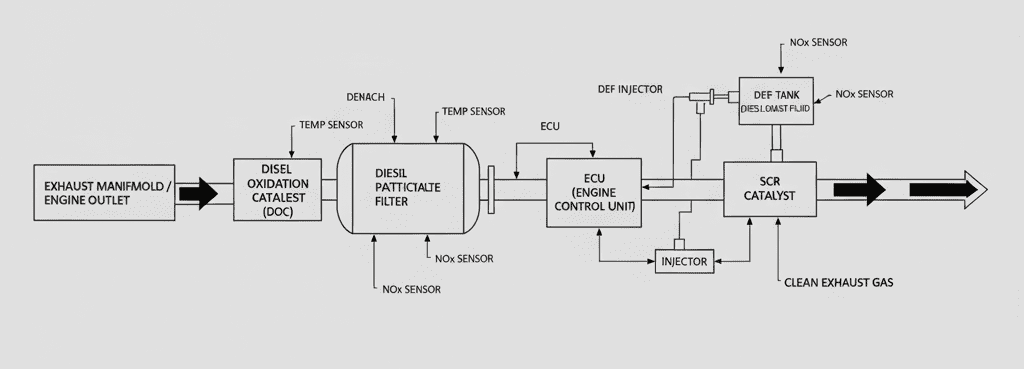
Many modern heavy equipment and trucks use emission systems.
DOC – Diesel Oxidation Catalyst
- Reduces carbon monoxide and hydrocarbons
- No regeneration needed
DPF – Diesel Particulate Filter
- Traps soot (black smoke particles)
- Periodically burns soot during regeneration
SCR – Selective Catalytic Reduction
- Uses DEF (AdBlue)
- Reduces nitrogen oxides (NOx)
African Working Conditions and Exhaust Systems
In many African environments:
- Fuel quality varies
- Machines idle for long hours
- Regeneration cycles are interrupted
This leads to:
- Blocked DPFs
- Warning lights
- Forced derates
Technician lesson:
Teach operators proper regeneration procedures.
Common Exhaust System Problems
Symptoms Apprentices Should Recognize
- Black smoke
- White smoke
- Loud exhaust noise
- Engine derate
- Excessive heat
Likely Causes
- Blocked exhaust
- Failed DPF regeneration
- Turbo exhaust leaks
- Cracked exhaust components
Basic Exhaust System Inspection Checklist
Apprentices should check:
- Exhaust leaks
- Loose clamps and brackets
- Soot marks around joints
- Excessive heat near wiring
- Warning lights related to emissions
Simple inspections prevent major failures.
Safety Notes for Apprentices
- Exhaust components get extremely hot
- Never touch after shutdown
- Exhaust gases are dangerous in enclosed spaces
- Always ventilate workshops properly
Follow lockout and tagout procedures before working.
Summary – What You Must Remember
- Exhaust systems remove heat and gases
- Restrictions reduce engine performance
- Modern systems require correct operation
- Good maintenance prevents costly downtime
A diesel engine can only perform well if air goes in freely and exhaust comes out freely.
Encouragement for Apprentices
Do not fear modern exhaust systems.
Learn how they work step by step.
A technician who understands exhaust and emissions is valuable anywhere in the world.
Follow the ModernTradeSkills Blog for practical diesel training built from real workshop experience.
For a particular engine manufacturer, please read the Cummins explanation of an exhaust aftertreatment.