

Heavy Equipment Safety Basics Every Beginner Must Know
Introduction
Operating heavy equipment is powerful, productive, and career-enabling—but it also comes with significant risks. Every year, accidents involving construction, mining, forestry, and railway machinery result in injuries, downtime, and equipment damage. For beginners, understanding safety fundamentals is the first step toward a long and successful career in heavy equipment operation or maintenance.
This article covers essential safety knowledge for operators, technicians, and site supervisors, including personal protective equipment (PPE), machine inspection, workplace hazards, safe operating procedures, and emergency protocols. Mastering these basics protects you, your team, and your equipment.
1. The Importance of Safety in Heavy Equipment Operations
Heavy equipment is extremely powerful, capable of lifting tons of material, moving earth, cutting trees, or drilling deep into rock. A single mistake can result in:
- Operator injury or death
- Co-worker injuries
- Equipment damage or destruction
- Project delays and financial loss
Safety is non-negotiable. Understanding both machine-specific risks and environmental hazards is essential before operating or inspecting any machinery.
2. Personal Protective Equipment (PPE)
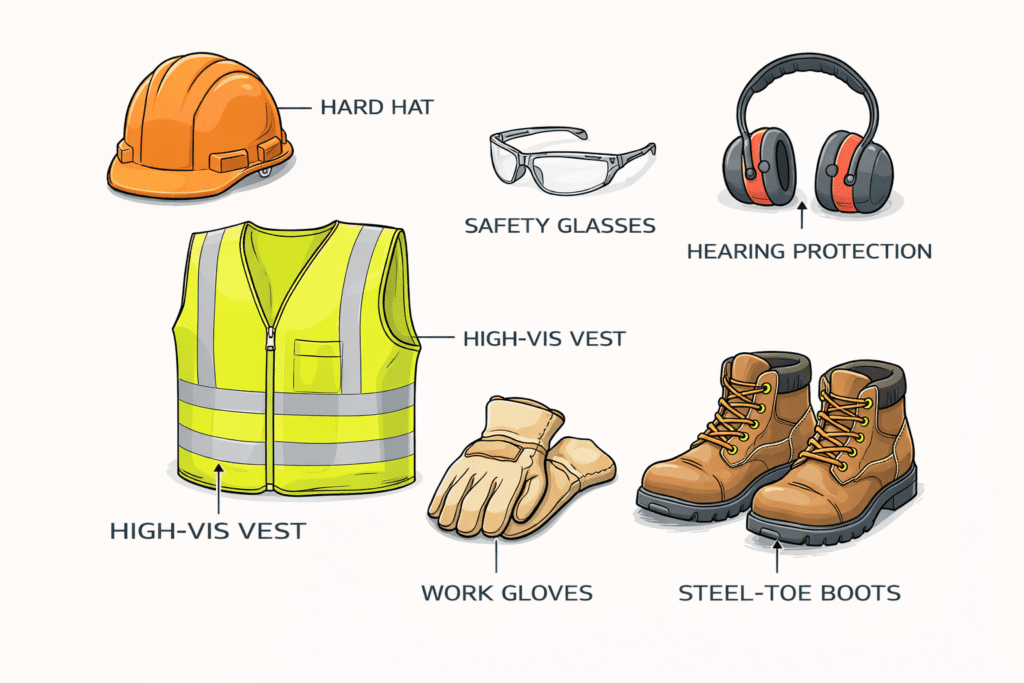
PPE is the first line of defense. Common PPE for heavy equipment workers includes:
- Hard hats: Protect against falling objects.
- Safety boots: Steel-toed boots prevent crush injuries.
- High-visibility vests: Ensure visibility on busy worksites.
- Gloves: Protect hands from cuts, burns, and vibration.
- Hearing protection: Protects from engine, hydraulic, and drilling noise.
- Eye protection: Prevents debris and fluid splashes from injuring eyes.
- Respiratory protection: Needed when operating in dusty, fume-filled, or chemical environments.
Operators should inspect PPE daily and replace worn or damaged items immediately.
3. Pre-Operation Inspections
Before starting any machine, perform a thorough pre-operation inspection. This ensures the equipment is safe and ready to work.
Key Inspection Areas:
- Engine compartment: Check oil, coolant, hydraulic fluid, and fuel levels.
- Undercarriage: Look for track tension, tire pressure, and damage.
- Hydraulic system: Inspect hoses, cylinders, and fittings for leaks.
- Controls and safety devices: Test brakes, horn, lights, seatbelts, and warning alarms.
- Attachments: Verify proper installation, locks, and operational condition.
Document inspections in checklists to maintain safety records and reduce risk of failure.
4. Understanding Workplace Hazards
Common Hazards:
- Collisions: With other equipment, structures, or people.
- Tip-overs: From uneven terrain, overloading, or improper operation.
- Falling objects: Material falling from lifts or excavation sites.
- Underground hazards: Utility lines, voids, or soft ground.
- Noise and vibration: Long-term exposure can damage hearing and cause fatigue.
- Weather conditions: Rain, ice, and extreme heat affect equipment handling.
Mitigation Strategies:
- Maintain clear communication using radios, hand signals, and spotters.
- Establish exclusion zones where pedestrians cannot enter.
- Follow machine load charts and manufacturer guidelines.
- Avoid operating in unsafe weather conditions when possible.
5. Safe Operating Procedures
Safe operation is a combination of training, planning, and attentiveness. Key guidelines:
- Mounting and Dismounting
- Use three points of contact
- Avoid jumping off machinery
- Starting and Shutting Down
- Follow manufacturer procedures
- Check surroundings before moving
- Movement and Load Handling
- Keep loads low during transport
- Move slowly on slopes or uneven ground
- Avoid sudden directional changes
- Blind Spots
- Always be aware of the machine’s blind spots
- Use mirrors, cameras, or a spotter when necessary
- Working Near Others
- Maintain safe distances
- Use audible alarms when reversing
- Communicate clearly with site workers
6. Emergency Procedures
Every operator must know how to respond in emergencies:
- Machine malfunction: Stop immediately, lower attachments safely, and shut down.
- Fire: Know the location and type of fire extinguisher. Use approved equipment only.
- Spill or leak: Contain hazardous fluids and follow site spill protocols.
- Medical emergencies: Know evacuation routes, first aid, and emergency contacts.
Training and regular drills are essential to ensure a rapid, safe response.
7. Safety with Attachments
Heavy equipment attachments like buckets, hammers, forks, and grapples add complexity and risk. Safety rules include:
- Only use attachments approved by the OEM
- Inspect hydraulic lines and mounting points before each use
- Never modify or overload attachments
- Follow manufacturer guidelines for maximum capacity and operation
8. Operator Ergonomics and Fatigue Management
Operator fatigue contributes to most accidents. Best practices include:
- Take regular breaks during long shifts
- Adjust seats and controls to minimize strain
- Stay hydrated and maintain proper nutrition
- Rotate tasks if possible to reduce repetitive stress
Ergonomics and alertness are as critical as mechanical safety.
9. Safety in Specific Environments
Construction Sites
- Watch for overhead power lines
- Avoid unstable excavations
Mining Operations
- Wear dust masks and respirators
- Follow strict rock-fall and blast protocols
Forestry Operations
- Beware of tree limbs and falling debris
- Maintain clearance for heavy equipment movement
Railway Projects
- Follow railway safety rules
- Use rail-specific equipment only on tracks
- Coordinate with signal operators
10. Training and Certification
Formal training is required to operate most heavy equipment legally and safely. Benefits of proper training:
- Understanding machine-specific risks
- Mastering pre-start inspections and maintenance
- Learning emergency response protocols
- Reducing workplace accidents and insurance claims
Certifications include:
- Construction and mining operator licenses
- OEM-specific machinery training
- Safety certifications (OSHA, ISO, or local regulatory standards)
11. Safety Culture and Continuous Improvement
Safety isn’t just rules—it’s a mindset. Encourage:
- Reporting hazards immediately
- Sharing lessons from near-misses
- Maintaining regular equipment inspections
- Using PPE consistently
A strong safety culture saves lives and reduces downtime.
Conclusion
Heavy equipment safety is non-negotiable. Beginners must understand PPE, pre-operation inspections, workplace hazards, safe operating procedures, emergency protocols, and the importance of proper training. Safety is not just about compliance—it is the foundation for efficient, reliable, and professional operation across construction, mining, agriculture, forestry, railway, and drilling environments.
Master these basics, and you build the confidence and skills to operate equipment safely while protecting yourself, your coworkers, and your machines.